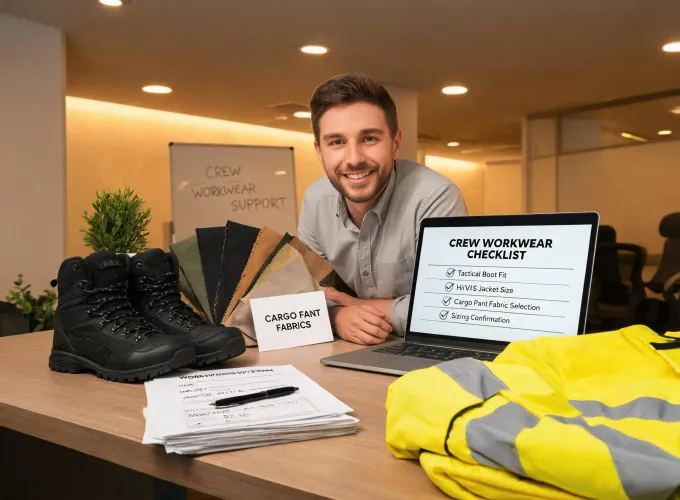
Selection Coaching

5.11 Tactical services that walk your crew through the gear choice

Our support model is built for supervisors and buyers who need a clear path, not a pile of uncertain options. We translate job tasks into practical duty pants, work boots, hi-vis layers, and tactical carry recommendations while keeping required standards separate from comfort preferences.

If your team needs ASTM F2413 I/75 C/75 footwear, EH-marked boot options, or ANSI/ISEA 107 Class 2 and Class 3 visibility planning, we help capture those requirements before color, pocket layout, and fit preferences enter the conversation.

5.11 tactical service advisor desk
How We Help

Support that turns field complaints into a cleaner gear program

01

Job-Task Gear Mapping

We start with the work: walking distance, kneeling, vehicle duty, ladder use, wet surfaces, traffic exposure, and customer-facing appearance. From there we recommend the 5.11 Tactical categories that fit the role instead of sending every worker to the same item.

02

Boot and Pant Fit Guidance

Crew acceptance often comes down to fit. We help collect size ranges, inseam needs, women's fit coverage, toe preference, outsole type, and waist movement notes so supervisors can avoid common returns and comfort objections.

03

Visibility and Weather Notes

For roadside and public works roles, we separate high-visibility class planning from general outerwear preference. Buyers can review ANSI/ISEA 107 Class 2 or Class 3 needs, then add rain, insulation, or softshell choices around the shift environment.

04

Reorder and Rollout Planning

We help create a simple reorder list for core pants, boots, jackets, belts, and bags. The result is a repeatable program with fewer one-off purchases, cleaner onboarding, and better visibility into replacement timing.

Crew Questions

Answers before the order gets messy

These are the questions we hear from supervisors who are trying to standardize 5.11 Tactical gear without ignoring real field differences. We keep the answer practical and point buyers back to the job task.

Usually no. The requirement may be shared, such as ASTM F2413 impact and compression, but outsole, insulation, waterproofing, and ankle height can vary by role. We help create a controlled option set.

Yes. We review pocket layout, fabric weight, stretch, weather exposure, hi-vis needs, and how often the crew replaces garments. The goal is a kit workers will actually wear through the shift.

Crew count, roles, required standards, current pain points, preferred colors, and order timing are enough to begin. Photos of existing gear can help us understand fit and pocket complaints.
Before and After

A cleaner way to move from scattered gear requests to a crew-ready program

Before

  • Workers buy different pants, boots, and bags with little guidance.
  • Procurement cannot tell which items are comfort preferences and which are requirement driven.
  • Returns spike because toe type, width, inseam, or jacket fit was guessed.
  • Supervisors repeat the same explanation every onboarding cycle.

After

  • Each job family has a short 5.11 Tactical kit with clear substitutions.
  • Standards and fit notes sit on the same worksheet for easy review.
  • Purchasing sees size runs, reorder quantities, and replacement timing earlier.
  • New workers receive a practical explanation that matches the work they do.
Ready to simplify the gear list?

Send the job roles and we will map a practical 5.11 Tactical starting kit

Use the form to share crew size, footwear needs, pants complaints, visibility requirements, and timing. We will respond with clear questions and a suggested path for next review.