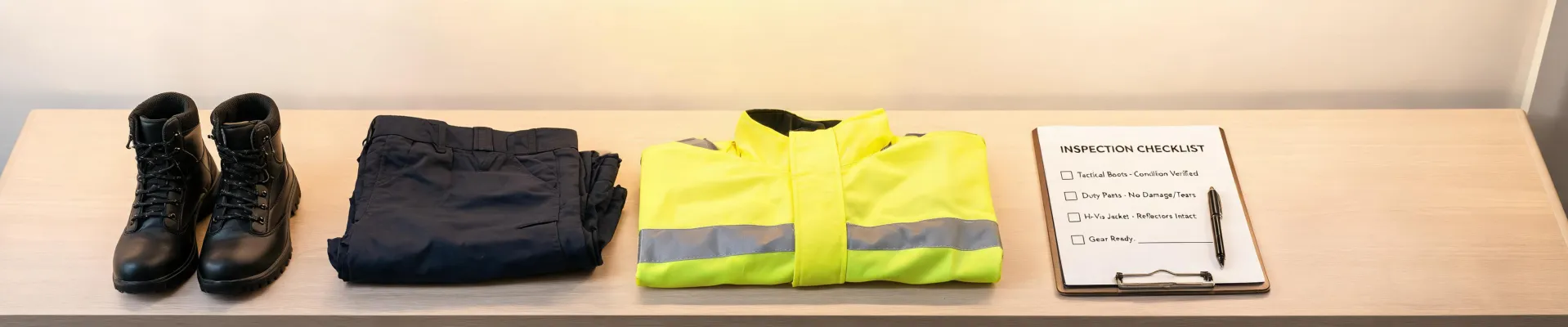
Here's the short version: If you're outfitting a security or facilities team, 5.11 tactical gear is worth the money when you start with fit samples and a maintenance plan, not when you buy from a price sheet. I've handled purchasing for a 400-person company for five years, and the biggest dollar mistake I made wasn't buying the wrong brand—it was ordering without verifying fit and follow-up testing. That mistake cost us about $2,400 in replacements and unhappy field techs.
I'm the office administrator for a 400-person security company across three locations. I manage roughly $120k in annual uniform, safety, and gear orders across eight vendors. I report to operations and finance. That means I care about smooth workflows, internal customers who don't file complaints, and invoices that don't bounce. When I took over purchasing in 2020, I processed a lot of reactive orders. Now I plan around standards.
The vendor failure in March 2023 changed how I think about backup suppliers. Our previous uniform supplier promised 20 pairs of pants in two weeks and delivered a partial order after four. One missed deadline made me look bad to my VP. Since then, I keep 5.11-tactical in the rotation as a second source and as a quality benchmark.
Why 5.11 makes sense for work, not just tactical scenarios
People think expensive gear costs more. Actually, gear that doesn't fail costs less over time. The causation runs the other way: 5.11 can charge more because their sizing is consistent and the fabric holds up. I do not say that lightly. Cheap gear has failed us, and the hidden cost is not the purchase price. It's the labor to replace it.
Most buyers focus on per-unit pricing and completely miss replacement cost. The question everyone asks is, 'What's the cheapest?' The question they should ask is, 'What happens when a zipper breaks during a shift?' That's the blind spot. I know because I made that mistake.
The order: pants, vest, boots, glasses
Once you decide 5.11 fits the job, break the order into four pieces.
5.11 tactical pants men's
For most of our field staff, I order 5.11 tactical pants men's sizes from 28 to 44. The Stryke and Defender-Flex lines have been reliable. The gusseted crotch means someone can kneel without ripping the seam. The pockets are laid out like a workbench, not a costume. I always order one sample size first. A size chart is a starting point, not a fit test. One team member wears a 36 in another brand and a 34 in 5.11. Samples save money. Worth it.
5.11 VTAC LBE tactical vest
The line item in our catalog is '5.11 vtac lbe tactical vest.' It's our default for security details and K9 handlers. The load-bearing clips matter more than the number of pouches. Ask whether the vest will be worn over a shirt or over a jacket before you order. We initially ordered all mediums. That was a mistake. Now I order two sizes and run a quick trial.
Even after choosing the VTAC over a cheaper option, I kept second-guessing. What if the sizing was off? The two weeks until delivery were stressful. Then the first officer tried it on and adjusted the straps in under a minute. That was the positive signal.
Rubber boots for wet work
Don't overthink rubber boots. For maintenance, K9 units, and rainy range days, a plain rubber boot with a composite toe is safer than a stylish tactical boot. We buy 5.11 ATAC boots for dry days and a basic rubber boot for wet work. The phrase 'rubber boots' is exactly what our facilities manager types into the catalog. I'd rather buy a boot that's easy to wash than one with more zippers. Not ideal, but workable.
Photochromic safety glasses
Photochromic safety glasses are the item people forget until the sun hits the gate. They are not sunglasses. They are safety glasses with lenses that darken in UV light and lighten indoors. For outdoor patrol, they solve the problem of another pair of glasses hanging around the neck. Look for ANSI Z87.1 marking on the lens. If it doesn't say Z87, it's fashion, not safety. Photochromic lenses take a few seconds to shift, so don't let someone drive into a dark tunnel and blame the glasses.
How to test a fire alarm without making it complicated
'How to test a fire alarm' might not seem like a 5.11 topic, but it's part of the same job: keeping people safe. Fire alarm testing is safety equipment maintenance. It's basically a monthly drill.
Here's the simple monthly test:
- Pick one smoke alarm and tell the team you're testing it.
- Press and hold the test button until you hear three beeps or a full alarm cycle.
- Release the button and press the silence/reset button if needed.
- Write the date on the back of the unit with a marker.
- If it doesn't sound, replace the battery or the entire unit.
That works for household-style units. For a commercial building, don't stop at the test button. NFPA 72 requires periodic inspection and testing by a qualified technician. We schedule that through a fire safety vendor, not a YouTube video. You can do the monthly check on your own, but the code test needs a paper trail.
Where 5.11 fits in a procurement plan
During our 2024 vendor consolidation project, I cut our vendor list from twelve to eight. The online ordering through the 5.11 wholesale portal cut our turnaround from about five days to two days. The automated part-number lookup eliminated the data entry errors we used to have with handwritten POs. Fewer manual steps, fewer angry finance emails.
But I don't order everything from 5.11. Rubber boots come from a local safety supply house. Fire alarms come from a commercial fire safety vendor. 5.11 doesn't make fire alarms, and I don't need a tactical vest for someone who only works at a reception desk.
Boundary conditions
5.11 isn't the right answer for every team. If your staff is mostly administrative, a $30 polo is fine. If there are no physical security roles, no K9 unit, and no outdoor patrol, you're paying for features you won't use. The gear is built for movement, load bearing, and concealment. Don't buy the vest because it looks like a video game character.
Per FTC advertising guidelines (ftc.gov), product claims must be truthful, not misleading, and substantiated with evidence.
So when we buy body armor, I look for NIJ certification on the label, not 'bulletproof' marketing on the box. The same discipline applies to all safety gear: trust the standard, not the adjectives.
Shipping adds time and money. USPS pricing effective January 2025 is $0.73 for a first-class letter and $1.50 for a large envelope, but boots and vests don't fit in envelopes. Plan for parcel shipping and verify current rates at usps.com before you quote a project.
If you're an admin buyer like me, your job isn't to pick the coolest gear. It's to pick gear that won't fail, won't get returned, and won't make you explain a non-compliant invoice. That's the job.