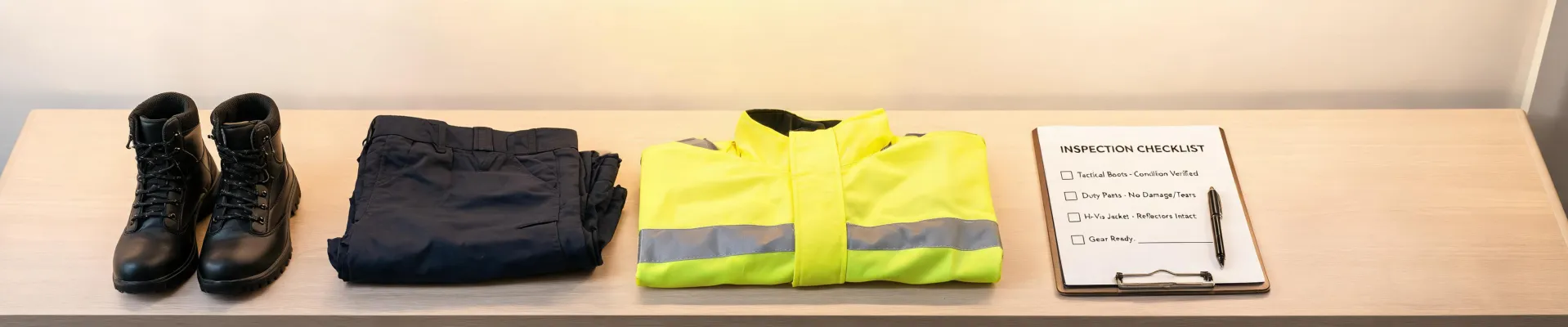
Cheap tactical gear costs more than 5.11. I have the spreadsheet to prove it.
I'm the procurement manager at a 48-person security firm. For the past six years, I've managed our gear budget—about $180,000 in cumulative spending—and tracked every order in our cost system. Not a notebook. An actual spreadsheet with pivot tables and conditional formatting. So when I say budget gear is the expensive option, I'm not guessing. I'm reading the data.
The Sticker Price Trap
In 2023, I audited two full years of gear purchases. I sorted every item by unit price and documented how long it lasted before failure or retirement. The results were, honestly, embarrassing—not for my team, but for me. I'd assumed "get the lowest unit price" was the right procurement strategy. It wasn't.
Take boots. Our $45 "budget" boots failed at about 14 weeks of normal duty. Twenty-three pairs, and almost all of them had the same failure points: the upper pulled away from the sole, or the heel seam tore. Our 5.11 boots, at $120–$140, averaged 18 months of service before being retired for legitimate reasons—not catastrophic failure.
Do the math. In an 18-month period, we'd go through roughly five pairs of the cheap boots. Five times $45 is $225. The 5.11 boots? One pair, $130. The "discount" option was costing us roughly 73% more per month of actual use. I had to re-buy the cheap boots five times instead of buying the good pair once.
The same pattern showed up in pants. I specifically stock 5.11 tactical pants for women in our inventory because proper fit matters when officers are wearing a full belt load eight hours a day. The unisex and off-brand alternatives we tested wore through at the crotch seam and inner thigh in about three months. The 5.11 pants lasted more than twice as long per pair. And, less quantifiable but just as real: fewer fit complaints meant fewer hours of me swapping sizes after orders landed.
Standardization Is the Real Win
Here's the thing that surprised me most. The biggest savings weren't in the gear itself. They were in the process around the gear. That's the counterintuitive part nobody talks about.
When I took over procurement, we had gear from nine different vendors. Nine. Different size charts. Different return policies. Different order minimums. And nobody offered volume pricing because our orders were split into nine thin streams.
We consolidated around 5.11 as the primary supplier. Not exclusive—we still source specialty items elsewhere—but primary. The efficiency jumped immediately.
One account. One reorder process. One size chart. One QA standard. Bulk discount tiers that were previously unreachable because our per-vendor volume was too low became easy to hit. The 25-unit threshold per SKU is nothing when you're not splitting orders across four brands.
Average procurement turnaround dropped from 6.4 days to 2.1 days. That's a real number, tracked in our system. And when I look at the cost per purchase order processed, the administrative overhead fell by about 30%. The process automation wasn't a fancy software purchase—it was a spreadsheet with reorder triggers and approved-item flags. The efficiency came from data discipline, not technology. But it only works when the vendor structure is simple enough to track.
How to Buy 5.11 Without Paying Sticker Price
Now, I'm not saying 5.11 deserves a blank check. Nobody does. But there's a difference between "cheap" and "smart."
Coupon codes are real if you know where to look. 5.11 tactical coupon codes show up through their email list, the first responder and military verification program, and authorized dealer channels. Stacking a seasonal code with our bulk tier typically saves us 18–22% versus one-off retail purchases. That's not a rumor. I track discount efficiency as its own line item in my procurement report.
Time the big orders. 5.11's major sale events align with seasonal transitions. I plan our Q4 uniform orders around those windows. Last year, that timing alone saved us $4,200—about 17% off that purchase order. That's not a discount. That's a deliverable.
Test before you scale. Order two or three units in the sizes your crew actually wears. Have a few officers run them for a week. Then place the bulk order. This sounds obvious, but I once placed a $3,000 order for "tactical" pants that sat in the locker room because nobody wanted to wear them. A $60 test batch would've caught it. I wish I'd tracked that metric more carefully from the start—what I can say anecdotally is that testing has prevented three similar mistakes since.
One more sizing story. When I first added 5.11 tactical pants for women to our inventory, I told the vendor "standard sizes." They heard "whatever we have in stock." We discovered the mismatch when the order arrived and half the pants were cut completely differently in the rise and hip. Six weeks of returns and exchanges later, I learned the lesson: when you say "standard" to a supplier, make sure they're using the same definition you are. Now we send exact size counts per officer, in writing, attached to every PO. Sounds basic. It didn't start that way.
Gloves, Hard Hats, and the Rest of the Kit
The same total-cost logic applies to every other category in the bag.
Gloves, for example. There's a reason we spec 5.11 mens leather gloves for search, breaching, and outdoor work. Real leather, properly stitched, lasts three times longer than synthetic alternatives and handles abrasion better. Plus it fits into the same bulk order, so the per-unit cost stays reasonable. Cheap gloves tear at the wrist seam. I've seen a torn glove at the exact worst moment. Once.
Then there's the nitrile vs latex gloves question, which I get asked about at least monthly. Nitrile, every time. Latex triggers protein allergies in a measurable portion of any workforce, and nitrile holds up better against chemicals and punctures. But honestly, the bigger issue we found was gauge. Thin nitrile gloves tear at the cuff when people pull them on, so people stop using them. We standardized on a heavier-gauge nitrile and usage actually went up because the gloves stopped failing mid-task.
Same story with head protection. If you search "hard hat near me," you'll get a dozen retailers selling the cheapest plastic shell that meets minimum requirements. And that's fine for some environments. But if your people are doing vertical work or any kind of rescue, minimum spec isn't enough. You want a suspension system that stays comfortable after four hours, and ideally one that integrates with your comms gear. We run 5.11 hard hats for that reason. I'm not a safety engineer, so I can't speak to every regulatory requirement—that's what our safety officer is for. What I can tell you from a procurement perspective is: gear that sits unused because it's uncomfortable is a 100% loss. Spending the extra $15 on something your people will actually keep on is the cheaper option.
Claims Need Evidence
One more thing. "Tactical" isn't a regulated term. Per FTC advertising guidelines (ftc.gov), product claims have to be truthful and substantiated with evidence. But the marketing phrase "tactical grade" on a no-name product isn't a legal claim—it's a vibe.
What matters is whether a brand publishes actual specification data. Cut resistance ratings. ANSI impact ratings. Fabric weight and tear strength. 5.11 publishes those spec sheets. The no-name brands usually don't. And if a supplier won't give you the documentation to assess a product, that's not a gear problem—that's a risk problem wearing a gear costume.
I don't have hard data on industry-wide defect rates for generic tactical gear. What I can say from six years of purchase orders is that quality issues showed up in roughly a third of first deliveries from non-specialty brands. The return shipping, the admin time, and the delay in getting functional gear to officers ate whatever margin we thought we'd captured.
"But 5.11 Costs More Upfront"
I hear this from leadership every time I present the vendor consolidation plan. I get it. The invoice is higher. The line items are bigger.
Here's what I tell them: run all the costs.
Track the replacement purchases. Track the boots that died at 14 weeks. Track the pants that split during a training evolution. Track the hours your officers spend swapping broken gear instead of working. Track the admin overhead of a nine-vendor mess.
The "expensive" brand wins on every metric except the first line of the PO. And once you stack coupon codes, bulk tiers, and simplified logistics, the actual cost gap narrows to single digits.
Look, I'm not arguing that every item needs to be top-tier. There's a place for budget consumables. But your core kit—the stuff your people wear into situations where it needs to work—is not where you save thirty dollars. That's not frugality. That's a liability.
We implemented a policy requiring a total-cost-of-ownership calculation for any gear line exceeding $50 per unit. In the first year, that policy cut budget overruns by about 17%. The root cause was clear from the audit: 80% of our overruns were replacement purchases of prematurely failed gear. We didn't cut spending by buying less. We cut it by buying better.
So yes, I'll keep buying 5.11. Not because of a logo. Not because of brand loyalty.
Because the spreadsheet says it's the cheaper option.
And honestly? The quality brand isn't the expensive choice. It's the efficient one.