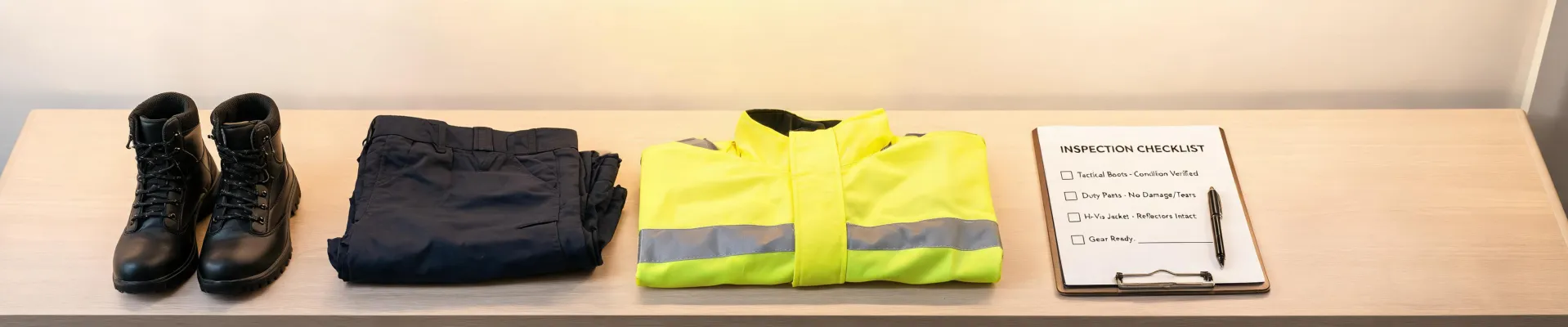
In the fall of 2022, I was handed a project that seemed straightforward enough: outfit a new 12-officer tactical team for our suburban police department. We needed everything—from 5.11 tactical boots waterproof options for the K9 unit to durable long-sleeve shirts and proper PPE performance gear. I had been handling procurement for two years by then, and I felt confident. That confidence turned out to be expensive.
What I didn't know then was that buying tactical and safety equipment for a professional department is a completely different beast from ordering office supplies. The mistakes I made over the next four months resulted in roughly $3,200 in wasted budget, a one-week deployment delay, and a bruised ego. Here's what happened and what I changed because of it.
Background: The "Simple" Project That Wasn't
The initial brief was clear: procure uniforms, boots, and protective gear for the new unit. The list included tactical pants (the 5.11-tactical Stryke PDU and Defender-flex lines were on the approved list), long-sleeve shirts (specifically the 5.11 tactical company long sleeve shirt 72515), and a range of boots including the ATAC 2.0 and Taclite Pro. We also needed duty gear like handcuffs and, critically, active shooter response equipment including ballistic vests and helmets.
My boss, a lieutenant with 20 years on the force, gave me two pieces of advice I didn't fully appreciate at the time: "Don't assume standard sizes work for everyone" and "Make sure you know the difference between 'duty ready' and 'budget friendly.'" I nodded, made a spreadsheet, and dove in.
The First Mistake: Treating It Like Any Other Order
My first order was for 12 pairs of the 5.11 Taclite Pro boots. I based the sizes on a uniform size chart from a different vendor (mistake number one). I also ordered 12 long-sleeve shirts—the 5.11 tactical company long sleeve shirt 72515—in what I assumed would be the most common sizes.
When the order arrived, four of the boots didn't fit. One officer, a woman on the team, needed a full size and width smaller than the chart suggested. Two others had wide feet that pinched in the standard width. And one officer simply didn't like the boot's fit. (Should mention: his previous pair had been a different brand entirely, and he was used to a roomier toe box.) The shirts? Three were too short in the torso—a fit issue I hadn't accounted for.
The most frustrating part of that initial order: the return policy. You'd think a department order would qualify for bulk flexibility, but the vendor's policy was strict. Exchanges took 10 business days. We lost a week waiting on replacements. The cost of return shipping plus the delay? About $890, and that was just the start.
The Second Mistake: Ignoring the Women's Fit Issue
If I remember correctly, our tactical team had two female officers. I had ordered men's sizes for them because the main product catalog didn't highlight women's-specific options. I assumed "unisex" meant it would work. It didn't. The 5.11 tactical boots waterproof models I had chosen (the ATAC 2.0 Shield) came in women's sizing, but I hadn't checked. The long-sleeve shirts were cut for a male frame. The vest carrier sat wrong. The pants (I had ordered the Stryke PDU) bunched at the hips.
I went back and forth between reordering in women's sizes or trying to make the men's gear work with adjustments for about two weeks. Men's sizes offered faster availability, but the women's-specific items from 5.11 (like the Defender-flex Women's pants) were a much better fit. Ultimately, I reordered—costing $640 plus another 5-day delay. Looking back, I should have checked the women's options from the start. At the time, I didn't know the fit differences were that significant.
The Third Mistake: Assuming "PPE Performance" Is Standardized
This is the one that still bugs me. We needed helmets and vests rated for active shooter response. I sourced what I thought were appropriate ratings based on a generic NIJ level. But when the armor arrived, the vest carrier didn't have the correct plate pocket configuration for our issued plates. The helmets were rated for bump protection but not rifle rounds (which I had assumed all tactical helmets were).
I had to send the helmets back and source proper ballistic-rated ones. The mistake also taught me a lesson about PPE performance standards: not all Level IIIA is created equal, and manufacturer specs vary. The correct standard for our use was NIJ 0101.06 Level IIIA (per the National Institute of Justice, as of 2023). The ones I ordered were rated for a different test round. That error on eight items cost $1,670 in redo plus the original vendor's restocking fee. Oh, and it added another 3 days to the timeline. (Note to self: verify NIJ compliance on the official NIJ database before ordering.)
The Pivot: Building the Pre-Order Checklist
After the third rejection in Q1 2024 (yes, I made a third mistake—I don't want to talk about the handcuff procurement issue), I created our department's pre-order checklist. It's now saved us, conservatively, from about 40 potential errors over 18 months. Here are the key items:
- Fit verification: Request sample sizes for every unique body type. Don't trust charts. If possible, have officers try on the actual brand's sizing—5.11's boots fit differently from Under Armour's or Danner's.
- Women's-specific options: Check whether the product has a women's SKU before defaulting to unisex. The difference is real.
- PPE standard cross-check: For body armor, verify the NIJ level AND the specific test round on the NIJ database. Confirm plate pocket dimensions with the plate manufacturer.
- Compliance: For items like handcuffs (we use 5.11's Peerless model) and fire extinguishers (for station use), check local regulations. Which fire extinguisher is used for electrical fire? In our stations, it's Class C, but state code also required CO2 extinguishers in certain rooms.
What I'd Tell Someone Starting Today
If I could redo that entire project, I'd add a 30% buffer on lead time and I'd spend a full day on size sampling. But given what I knew then—nothing about the nuances of tactical gear procurement—my choices were, I think, reasonable for a first attempt. An informed customer asks better questions and makes faster decisions. I'd rather spend 10 minutes explaining fit options to a new officer than deal with mismatched expectations after the gear arrives.
The bottom line: buying tactical equipment isn't like buying office chairs. The stakes are higher, the fit matters more, and the standards are non-negotiable. (I really should write that on a sticky note for my desk.) Prices and availability as of early 2025 for 5.11's lineup vary by contract; verify current pricing and lead times with an authorized distributor.
And that's the thing I've come to believe after four years: the gear is only as good as the process that selects it.
