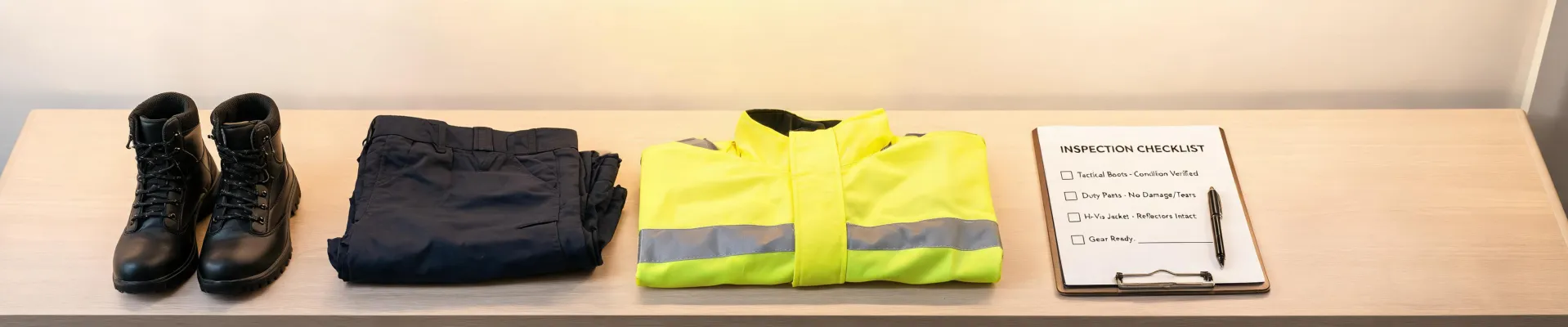
I've been handling purchasing for a mid-sized security contracting firm for about six years now. And after the first eighteen months, I became the guy who maintains our team's vendor checklist. Not because I'm a natural organizer. Because I made every rookie mistake you can make. Total personal blunders: roughly $3,200 in wasted budget, plus a lot of embarrassment.
So let me say this plainly: In procurement for tactical and safety equipment, the cheapest option is almost never the most cost-effective one. Everything I'd read in industry blogs said to 'optimize unit cost.' But in practice, for our specific needs—law enforcement contracts, reliable field gear, compliant safety stations—that single-minded focus on price has burned us more often than it saved us.
The Classic Mistake: Buying the Boots That Were 'Good Enough'
In my first year (2018, if I remember right), I made a classic newbie error. We needed a batch of work boots for a new crew. I saw Reebok work boots listed at a discount—they were about 30% cheaper than the 5.11 tactical boots our crew leads had requested. I thought, 'Boots are boots. The specs look similar.'
I approved the order. $1,200 for the whole batch.
They fell apart. Not all of them, but enough. Three pairs had the sole separate within the first two months. One pair developed a tear at the seam after a single deployment in wet conditions. The crew complained about foot fatigue on longer shifts. That $200-per-pair savings turned into a $1,350 problem when I had to rush-order the correct boots, pay expedited shipping, and deal with the grumbling about 'those uncomfortable cheap boots.'
That was my overconfidence failure. I knew the crew wanted the 5.11s. I thought I could save money. Well, I learned the hard way that comfort and durability aren't optional features—they're part of the product.
Why 'Standard' Isn't Standard: The ASP Handcuffs Order
Here's a mistake that still makes me cringe. We needed a supply of ASP handcuffs for a new contract. I found a distributor offering them at a price that seemed too good to be true. It was. The handcuffs were an older model, discontinued by ASP. They were perfectly functional, but they weren't the model our training manual specified.
When the client's inspector noticed, we had a problem. The contract specified 'current production model ASP handcuffs.' My 'deal' cost us a $320 order plus a 3-day delay while we sourced the correct ones. I'd saved maybe $80 on the purchase, and it cost us more than double that in administrative time and rushed shipping.
The conventional wisdom says to always get multiple quotes. My experience with over 150 orders suggests that relationship consistency with a trusted vendor often beats chasing marginal cost savings. I've worked with the same 5.11 Tactical Canada supplier for three years now. They know our compliance requirements. They don't sell me the wrong model.
The 'Cheaper' Option That Cost Double: The 5.11 MOAB 3 Case
I'll give you another example. A team lead wanted the 5.11 Tactical MOAB 3 backpack. I found a nearly identical-looking bag from a non-tactical brand for half the price. The zippers failed within four months. The MOAB 3 is still going strong for the guy who originally requested it, two years later.
That's not just durability. It's the design features—the hydration port, the specific pocket layout for radio gear, the MOLLE webbing. The cheaper bag looked similar in a product photo. In the field, it was useless for our needs. I should have known better. I let the price tag blind me to the functional requirements.
An Unexpected Lesson: The Eyewash Station
Not all my expensive lessons were about 'tactical' gear. We had to equip a new workshop with emergency safety gear. I ordered an eyewash station from the cheapest supplier I could find. It came with poor instructions, missing mounting brackets, and a bottle that didn't seem to fit the bracket.
I spent an hour trying to install it. Then I gave up, ordered a proper one from a known safety equipment supplier, and paid for next-day delivery. Total extra cost for that one item: about $45 plus my own wasted time. But it was the pattern that bothered me. I knew the right thing to do. I just thought I could cut a corner and save ten bucks. That's the thing about cost-cutting mindsets—they compound. Over a year, all those 'small' savings add up, but so do the 'small' failures.
So, What Have I Learned?
I get why people go with the cheapest option. Budgets are real, and managers are always looking for savings. But the hidden costs are real, too. They're just hidden until after you've made the purchase.
Here's my current checklist when I evaluate gear for 5.11 Tactical, Reebok work boots, ASP handcuffs, or even eyewash stations:
- Verify the exact model and specifications. Is this what the end user requested? Is it the current production version?
- Check the vendor's return policy and warranty. A slightly higher price might include a much better after-sale service.
- Factor in delivery time and reliability. A week of downtime waiting for a replacement is a cost.
- Ask the team what they actually need. The creep who wears their boots for 12 hours a day knows more about boots than the spec sheet or the price tag says.
Granted, this mindset requires more upfront work—talking to the team, verifying specs, building vendor relationships. It's tempting to just click 'buy cheapest' and move on. But I've learned that the few minutes of due diligence upfront saves hours of problem-solving later.
Look, I'm not saying you should always buy the most expensive option. I'm saying you should buy the option that provides the best total value for your specific requirements. For professional use—whether it's tactical gear, safety equipment, or work boots—that rarely means the cheapest one on the shelf.
That $200 saving isn't worth it if it turns into a $1,500 problem. Trust me. I've tracked the numbers.