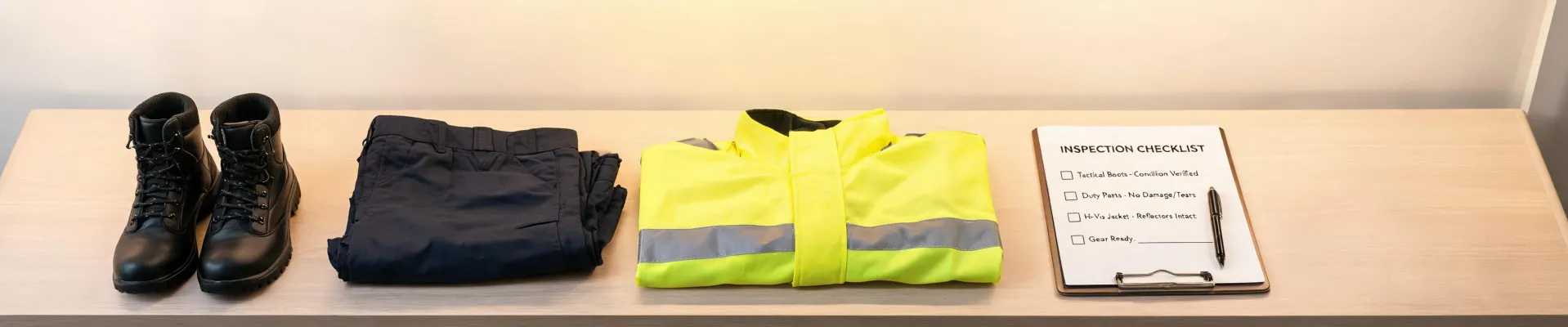
-
The comparison I actually ran
-
1. Toe construction: moc toe vs. the Helly Hansen stitch profile
-
2. Water protection: the dimension where Helly Hansen is hard to beat
-
3. Lacing systems and how to tie work boots (yes, this matters)
- 4. The supporting PPE: hi-vis vests and tinted safety glasses
-
So which one should you buy?
Warehouse and field operations supervisor handling PPE procurement orders for 11 years. I've personally made (and documented) 7 significant purchasing mistakes, totaling roughly $4,800 in wasted budget. Now I maintain our team's PPE checklist so nobody else has to learn the way I did.
Last November I had to replace boots for a 60-person crew before a winter infrastructure project. Two options sat on my desk: a traditional moc toe work boot and the Helly Hansen workwear boots our European partners kept recommending. I also needed to sort out tinted safety glasses for the outdoor crews and hi-vis vests that actually met spec. This is what I found after testing all of it—plus the three mistakes that cost me real money along the way.
The comparison I actually ran
I didn't set out to write a review. I set out to not screw up a $14,000 PPE order. So I ran four comparisons that mattered to my crew: toe construction and durability, water protection, lacing systems, and the supporting PPE (hi-vis and eye protection). Each one has a clear winner for specific situations—not a blanket "this brand is better" answer.
1. Toe construction: moc toe vs. the Helly Hansen stitch profile
Moc toe boots have that raised, U-shaped seam across the top of the toe box. The appeal is real: the stitching gives the toe box more flex, and on a ladder or in a crawlspace that flex matters. The problem is that same stitching is the first thing to go. On a cheaper pair I bought in spring 2023, the welt stitching started separating after about 90 days of daily wear. I'd skipped the "does the stitching sit above the sole edge" check because the boots looked fine on the shelf (note to self: they never look bad on the shelf). They weren't fine. That trial batch cost $1,100, and about $700 of it was unusable within four months.
The Helly Hansen workwear boots we tested use a more enclosed toe construction with a protective cap that meets ASTM F2413 impact and compression requirements. In plain terms: the protection doesn't depend on an exposed seam. For crews doing a lot of kneeling, crawling, or working around aggregate, that's usually the more durable choice.
Where moc toe still wins: if your crew needs ankle flexibility for ladder work, and you're willing to inspect the welt stitching monthly, a well-made moc toe is a legitimate tool. Just don't buy the cheapest one and assume it'll hold. I did. It didn't.
The moc toe vs. Helly Hansen decision kept me up for about a week. On paper, the moc toe was cheaper per pair and the crew genuinely liked the look. My gut said the wet conditions would punish us. I compromised and ordered half and half—that split is the only reason the January incident report wasn't worse.
2. Water protection: the dimension where Helly Hansen is hard to beat
This is where the comparison stops being close. Helly Hansen built its name on rainwear and waterproof membranes (the same Helly Tech construction family they use in professional fishing and sailing gear), and that DNA shows up in their workwear boots.
The moc toe boots we tested relied on wax or oil treatment for water resistance. That works for light rain and splashes. It does not work for a winter jobsite where you're standing in slush for eight hours. Here's the mistake: I knew I should have run a standing-water test before committing the crew, but I figured "what are the odds it pours in week one?" The odds caught up with us on day four. Six pairs soaked through, and we lost half a shift to wet feet and a supervisor conversation I'd rather forget.
If your crew works in wet conditions, European safety footwear standards are worth checking—EN ISO 20345 covers waterproof classifications (the "WR" marking for water resistance, "WRU" for water penetration and absorption). Helly Hansen's professional line is designed against those standards. Ask for the certificate; don't take the marketing page's word for it.
3. Lacing systems and how to tie work boots (yes, this matters)
The moc toe boots came with traditional eyelets. The Helly Hansen pair had a mix of eyelets and speed hooks up top. Speed hooks are faster to get on and off—which sounds minor until you're doing it sixty times a day.
But the bigger lesson was about how to tie work boots properly. I'd been tying mine the same way since I was twelve. Turns out that if you want ankle support to actually hold, you lace up to the second-to-top hook, tie a surgeon's knot (loop the laces twice before pulling tight), then finish with a standard bow. The double-loop locks the lacing tension at the ankle so it doesn't creep loose mid-shift. I skipped that step for two weeks because "my boots never come loose." They came loose on a ladder. No injury, but close enough that I now teach the surgeon's knot in every new-hire PPE briefing.
4. The supporting PPE: hi-vis vests and tinted safety glasses
Boots are only part of the kit. Two other items bit me on this order.
Hi-vis vests
We standardized on Helly Hansen hi-vis vests after the first batch failed a spot check—the reflective tape wasn't positioned to meet ANSI/ISEA 107 performance class requirements for our road-adjacent work. The Helly Hansen version we switched to is certified to the standard, and the tape placement actually holds up after washing. This matters more than people think: reflective tape degrades with industrial laundering, and a vest that passed on day one can fail by month six.
Tinted safety glasses
Outdoor crews wanted tinted lenses; indoor crews needed clear. Both need to meet ANSI/ISEA Z87.1, and tinted lenses specifically need to maintain the impact rating (some cheap tinted lenses don't, because the tinting process weakens the lens). We now buy Z87.1-marked tinted glasses only, and we keep a clear pair clipped to every vest for going back inside. I wasted about $240 on unmarked tinted glasses in 2022 that I had to pull from service—not a huge number, but it's the kind of $240 that keeps showing up when nobody's checking the markings.
So which one should you buy?
Here's the honest answer, and it depends on the job:
- Pick moc toe boots if your crew needs toe-box flexibility for ladder or crawlspace work, you can commit to monthly welt-stitch inspections, and the work is mostly dry. Buy a mid-tier pair, not the cheapest—the $40 saved up front usually costs $200 later.
- Pick Helly Hansen workwear boots if the job involves sustained wet conditions, heavy abrasion, or you need certification you can hand to a safety auditor without a follow-up email chain. The upfront cost is higher; the failure rate we measured was lower.
- Mix the kit if you have both kinds of work. We ended up with Helly Hansen boots for the outdoor wet crew and two well-made moc toe pairs for the indoor ladder team. That split cost about 8% more than a single-brand order, and it cut our return rate to near zero.
One last thing: whatever you buy, verify the certification markings yourself. The box should list ASTM F2413 (or EN ISO 20345 for European-spec products), and the hi-vis and eye protection should carry visible ANSI/ISEA markings. If a vendor can't produce the certificate, that's the answer to your question.
Prices referenced are from our Q4 2024 purchase orders; verify current pricing and certification listings with your supplier before ordering.