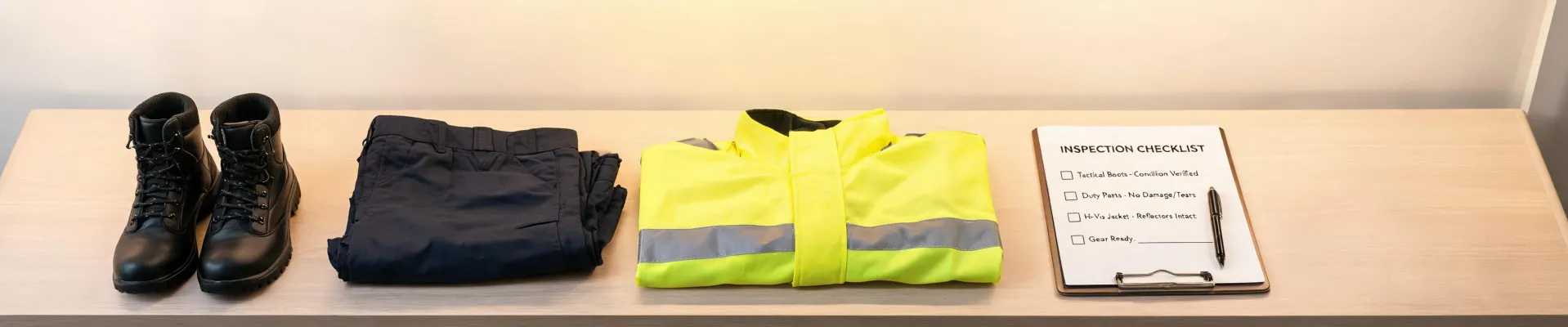
There’s no single “best” work boot—here’s how I sort them
I’m the quality and brand compliance manager for a safety supply company. I review every delivery before it reaches customers—roughly 200+ SKUs a year across work boots, safety glasses, gloves, hard hats, and fire equipment. In Q1 2024 alone, I rejected about 12% of first deliveries, most often because a spec was visibly off from what we ordered.
One of the most common questions I get from procurement teams is some version of: “Which work boots should we buy?”
My honest answer: it depends. And not in the hand-wavy way that phrase usually means. Three variables do most of the work:
- The dominant hazard. Impact and puncture? Slips and liquids? Fatigue from standing all day?
- Shift length and distance. Four hours on concrete is a different requirement than ten.
- Environment. Welding sparks, chemical splash, and wet floors each push you toward different specs.
Once you know those three, the boot decision gets a lot simpler. Here’s how I break it down—plus the maintenance step (yes, the smell thing) that everyone skips.
Scenario A: Impact and puncture hazards dominate
Think construction, heavy manufacturing, welding, demolition. Your priority is the toe and the sole plate.
The minimum: ASTM F2413-18 certification with I/75 (impact) and C/75 (compression) ratings. Steel toe or composite—steel is generally thinner for the same protection; composite doesn’t conduct cold or set off metal detectors. Either is fine; the rating matters more than the material.
For welding specifically, add a heat-resistant outsole and—this is the one people forget—metatarsal guards if the job requires overhead work. Black work boots make practical sense here: welding spatter and oil don’t show as obviously on black leather. The flip side is that scuffs and cracks are also less visible, so you need to actually inspect them rather than rely on “they still look okay.”
Durability is where construction really separates brands. Goodyear welt construction matters because it lets a cobbler replace the sole instead of the whole boot. I’ve seen Red Wing work boots come back through our own warranty process after three years of daily wear with one resole—still structurally sound. That’s not a guarantee for every pair, but it’s the pattern I’ve watched through four years of reviewing returns.
One note on reading a catalog: the safety ratings and construction details matter more than the marketing copy. When I review the Red Wing catalog for our procurement team, I go straight to the spec table—outsole material, welt type, toe rating—and skip the lifestyle photos.
Scenario B: Slips, liquids, and chemical splash
Food processing, chemical handling, cleaning crews, outdoor wet work. The dominant risk here isn’t a falling object—it’s the floor.
Priorities shift to outsole slip resistance (look for SR-rated), waterproof construction, and—if there’s any electrical exposure—EH-rated soles. Here’s the tradeoff nobody mentions in the catalog: waterproof and breathable are basically opposites. A fully waterproof boot will keep water out and also trap sweat in. If you’re in a wet environment but moving constantly, expect to manage moisture internally (more on that below).
This is also the scenario where safety goggles stop being optional. Chemical splash doesn’t care whether you’re wearing a hard hat. According to OSHA’s eye and face protection guidance (osha.gov), employers must provide eye protection whenever there’s a reasonable probability of injury—and “reasonable probability” in a chemical handling area is basically all the time.
One counterintuitive thing: in some food processing environments, a lighter, more flexible boot with better drainage beats a heavy waterproof tank. If you’re standing in washdown conditions all shift, a boot that drains and dries fast can outperform one that keeps water out but stays soaked once it gets in. I’ve watched teams switch to this approach and see fewer complaints—not more.
Scenario C: Long shifts, fatigue is the real cost
Warehousing, logistics, assembly lines—the environment isn’t extreme, but eight to twelve hours on concrete is its own kind of hazard.
Here, fit matters more than almost any specific safety feature. Width options, proper arch support, and a break-in period that doesn’t destroy the first two weeks. This is where professional fitting actually earns its keep—Red Wing’s fitting process exists for a reason, and it’s not marketing. I ran a blind test with our warehouse team: same boot model, one group fitted properly, one group ordering their “usual size.” The properly fitted group reported significantly fewer hot spots at the two-week mark. The cost difference was negligible; the return rate difference wasn’t.
How to make work boots not stink
This is the question I get asked most often after “which boots,” and it’s genuinely under-discussed. The short version:
- Rotate two pairs. Give each pair 24 hours to dry out. This single change fixes more odor problems than any spray.
- Change socks daily—and choose the material. Merino wool or synthetic blends, not cotton. Cotton holds moisture against your foot.
- Use cedar shoe trees or boot dryers. Cedar absorbs moisture and doesn’t just mask smell.
- Baking soda works, but not the way people think. A tablespoon in each boot overnight absorbs moisture; vacuum it out in the morning. It’s not a permanent fix because the bacteria come back, but it buys you time between cleanings.
- Don’t seal them in a locker. Boots need airflow. A closed plastic bag is how you grow science experiments.
The fundamental point: odor is a moisture problem, not a smell problem. Fix the moisture, fix the smell.
How to figure out which scenario you’re in
Three questions, in this order:
1. What does your incident log actually say? Not what you assume—what the near-misses and injuries report. If slips dominate, jump to Scenario B. If it’s dropped objects and punctures, Scenario A. If it’s repetitive strain and complaints about feet, Scenario C.
2. How long and how far? Eight hours standing still is different from eight hours walking ten miles. The second needs lighter and better-cushioned.
3. What’s the environment doing to the boot? Welding sparks, chemical splash, hydraulic fluid, salt water—each one tells you which materials and ratings you can’t skip.
A real example from our side: in Q3 2024, we had a warehouse expansion and needed 30 new hires fitted in under two weeks. Normally I’d insist on individual fitting and width confirmation. There was no time. I ordered based on the previous batch’s size distribution.
Returns came in at 18%. Almost all of them were a half-size narrow. The two weeks between ordering and delivery were stressful—I kept second-guessing whether I should have pushed back on the timeline. In hindsight, I should have scheduled a single on-site fitting day, even if it delayed the order by three days. We did that for the next batch. Returns dropped to under 5%.
So glad I pushed for the fitting day on the second order. Almost skipped it again to save a week—would have repeated the same 18% return rate and the same tense two weeks waiting to see how bad it was.
Know your dominant hazard, respect the fitting process, and don’t skip maintenance. The boot you buy matters—but the way you rotate, dry, and maintain it matters just as much by month six. What was best practice five years ago (heavy equals durable, one pair per year) doesn’t hold up in 2025. The fundamentals of protection haven’t changed; the way we deliver them—ratings, materials, fitting—has.