-
Who This Checklist Is For
-
Step 1: Write Down Your Mission Profile Before You Open a Catalog
-
Step 2: Verify the Specific Product, Not Just the Brand
-
Step 3: Check Plate and Vest Compatibility (The Step Everyone Skips)
-
Step 4: Build a Footwear System, Not Just Boots
-
Step 5: Calculate the Full Cost, Not Just the Price Tag
-
Step 6: Field Test Before You Scale
-
Common Mistakes I Still See
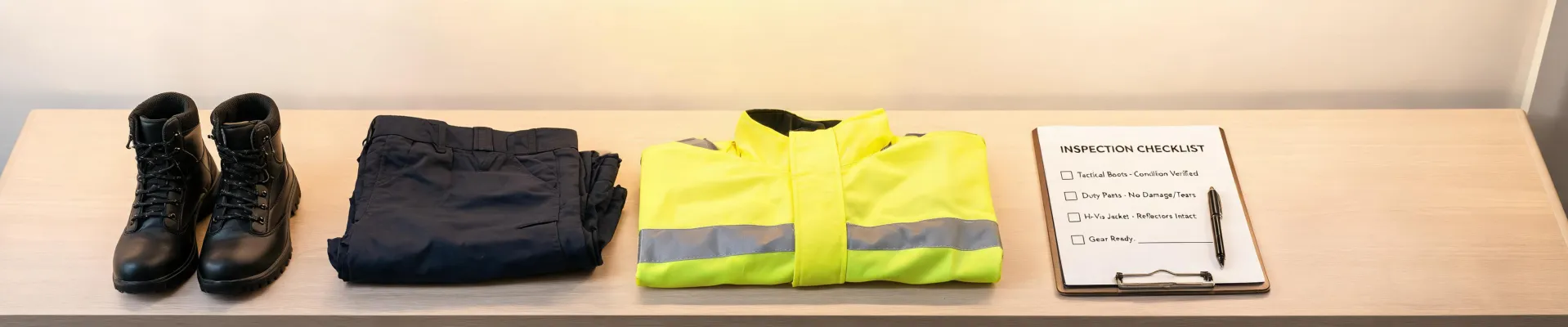
This checklist is for anyone about to buy tactical gear—whether it's your first pair of duty pants or a full plate carrier setup. If you've ever ordered something that looked right online and felt wrong in real life, this one's for you. I've made every mistake on this list so you don't have to.
I've been handling equipment orders for my team for 7 years. In my first year (2017), I made the classic specification error: assumed “tactical” meant the same thing to every manufacturer. Cost me about $3,200 in gear that didn't fit, didn't integrate, or didn't survive field use. Now I maintain our team's pre-purchase checklist. We've caught 47 potential errors with it in the past 18 months.
Here's the thing: most tactical gear advice is either overly simple or pure brand hype. What follows is a plain checklist. Six steps, in the order I actually use them.
Who This Checklist Is For
Use this if you're buying your first set of gear, ordering for a team, or have been burned by specs that didn't match what showed up in the box. Skip it if you already have a proven procurement process—though honestly, it's short enough that you might as well read it anyway.
Step 1: Write Down Your Mission Profile Before You Open a Catalog
From the outside, tactical gear all looks like it should hold up anywhere. The reality is different: a patrol officer's needs are nothing like a range instructor's, and both are different from someone doing facility security. Most people skip this step, and it shows. They buy the same boots and vest that a buddy recommended, without asking what conditions they'll actually face.
Things to write down:
- Environment: indoor, outdoor, desert, rain, cold
- Activity level: standing for 10 hours vs. moving constantly
- Load requirements: what you'll actually carry on your body
- Wash/dry cycle: how often you can clean your gear
That last point catches people. Working multiple days in a row means you need gear that washes and dries overnight. If you're in a vehicle most of the day, breathability matters less than resisting seatbelt wear.
Step 2: Verify the Specific Product, Not Just the Brand
A lot of people search for 5.11 tactical men's tactical cotton canvas pants 74251 expecting one thing, but this specific item has its own cut, fabric, and sizing quirks. The item number isn't just a SKU—it represents a specific production batch and material spec.
I learned this the hard way. I assumed identical product numbers meant identical results across orders. Didn't verify. Turned out the same item had a subtle fabric change between production runs that affected how it fit after washing.
What I do now:
- Check the full item number and look up the current version, not just the product name
- Look at the exact fabric composition—cotton canvas (this one uses a cotton/nylon blend) behaves differently from 100% cotton
- Search for recent reviews, not just the product page
The oversimplified advice is “just order your regular size.” That ignores how dramatically cuts vary. The 74251 has an athletic cut; someone used to relaxed-fit pants will find it snug in the thighs. That's not a defect—it's a design choice. But it's a choice you need to know about before you buy 20 pairs.
Step 3: Check Plate and Vest Compatibility (The Step Everyone Skips)
If you're buying 5.11 tactical vest plates or any plates, this is where you can lose the most money.
I assumed plates were standardized. Didn't verify. Turned out “standard” only covers basic dimensions—the actual fit in a carrier depends on the plate's thickness profile and curvature, and not every carrier accepts every plate. The mistake affected 12 plates and cost about $1,400, plus the embarrassment of explaining it to the budget manager.
The checklist here:
- Measure the actual plate pocket of the carrier; don't trust online specs alone
- Check plate thickness against the carrier's pocket tolerance
- Verify whether you need a specific curvature (side plates are the usual culprit)
- Wear the full system together for at least 15 minutes before you commit—a carrier that fits empty can feel completely different with plates and pouches loaded
That last point is really important. A plate carrier that shifts even half an inch under load is not a minor annoyance; it affects how you move and how confident you feel in it.
Step 4: Build a Footwear System, Not Just Boots
Let's talk about mens chelsea work boots, a style that gets a lot of attention in the tactical space. Good Chelsea boots are a solid choice if you're standing or walking on hard surfaces all day. Clean silhouette, no laces to fail.
But how to keep feet dry in work boots isn't just about picking a “waterproof” boot. It's a system:
- Moisture-wicking socks—and ideally a spare pair in your locker
- Waterproofing treatment matched to the boot material
- A real drying setup: newspaper works, boot dryers work better
- Two pairs in rotation, because a boot that fully dries between shifts lasts three times longer
I went back and forth between a lower-cost Chelsea boot and a higher-priced pair for two weeks when outfitting our team. The cheaper one saved us $45 per boot. The pricier one had a better insole and more durable sole construction. Ultimately I chose the pricier option, because foot failure isn't something you want to explain in a field report. (Note to self: never compromise on footwear again.)
Step 5: Calculate the Full Cost, Not Just the Price Tag
Total cost includes base price, shipping (which, honestly, is significant for plates and boots), accessories you'll need to make the gear functional, and the replacement timeline. The “get the cheapest gear to start” advice ignores the total cost of ownership. If a $150 piece of equipment fails in the field and creates a $500 problem, the savings were fictional. That's not brand hype; that's math.
Also factor in training time: if your team needs to learn a new system, or if the gear requires a different way of working, that's a cost too. The most efficient gear is the gear people already know how to use correctly.
Step 6: Field Test Before You Scale
After the plate incident in September 2022, I created a field-test protocol: order one unit first, wear it in actual conditions for a week, then decide whether to order the rest. It slowed down the first few purchases but cut our bad-order rate to zero.
The test checklist:
- Wear it 40+ hours in varied conditions, not just in the store
- Wash and dry it at least three times before judging the fit
- Note pressure points at hour 6, hour 9, hour 12
- Move the way you actually move: kneel in the pants, sit in a vehicle, reach under a desk, climb a ladder
The range behind our facility (the one with the black fence you can see from the parking lot) was where we tested everything. It's a decent place to simulate movement, and honestly, having a dedicated spot makes the testing feel like part of the process instead of a chore.
Common Mistakes I Still See
Even after implementing this checklist, I watch people make predictable errors. The big ones:
- Buying on brand name alone, or on price alone—both are lazy shortcuts
- Ignoring the weight of gear. A pound on your feet is five on your back. That saying exists for a reason.
- Believing “it'll break in over time.” A boot might soften, but a fundamentally wrong size or shape never becomes comfortable.
- Ordering the full quantity before testing a single unit. I did this once. Never again.
- Assuming the current version of a product is identical to the version someone reviewed two years ago. Manufacturers change materials and stitching details constantly.
One last thought. The gear market has shifted toward online ordering, which is genuinely a good thing for efficiency. But efficiency only counts when the return rate is low. This checklist takes about 30 minutes before a purchase and saves you from the multi-week headache of returns, replacements, and explaining to leadership why budget went to gear that's sitting in a storage room.
Use it. It's a lot cheaper than the way I learned it.