The question I hear most often in my line of work isn't about specifications or certifications. It's a simple one: "Can I just use this instead?"
"Can you use latex gloves for cooking?" is a real search I've seen. Not from food service workers — from professionals staring at a box of cheap gloves and wondering if gear really needs to be purpose-built, or if "close enough" actually gets the job done.
That question captures a pattern I've watched for six years as a logistics coordinator at a tactical equipment supplier. When a gear plan falls apart, my phone rings. I've handled 200+ rush orders, including same-day turnarounds for sheriff's departments and private security firms. And I can tell you: the same faulty question sits underneath almost every bad procurement decision I've seen.
The Call That Changed How I See the Problem
In March 2024, a sheriff's office in the Pacific Northwest called at 4:30 on a Thursday. They needed boots and gloves for six new hires. Field training started Monday morning.
We could work with that. Then came the catch: "Our lieutenant tried on a pair of Hoka work boots at the store and loved them. Can we get those instead?"
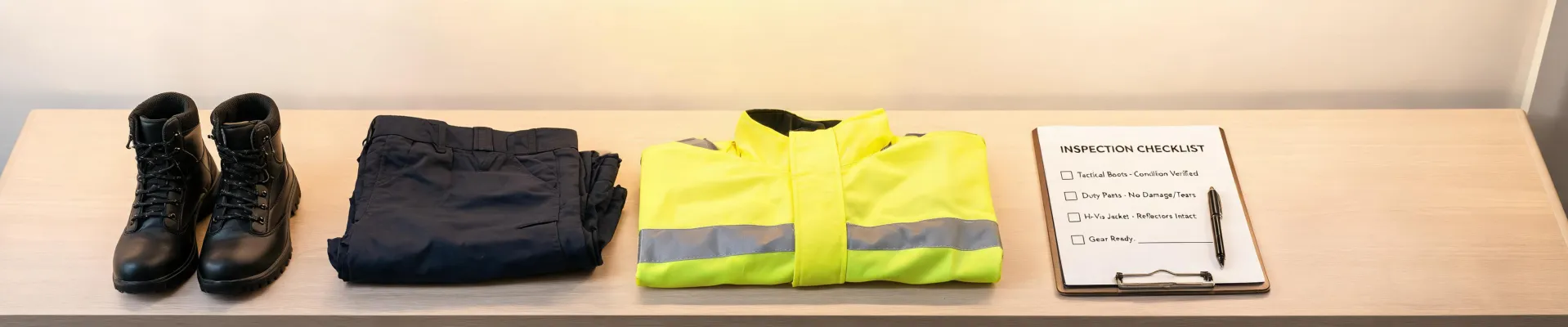
To be fair, Hoka work boots are comfortable. The cushioning is no joke. But this wasn't a job for a running-shoe company's work boot with a lugged sole. This was patrol in wet terrain, twelve-hour shifts, wrist grabs, contaminated scenes, uneven ground. The right tactical boot needs to do more than feel good in a store aisle.
That call ended with us expediting a shipment from a 5.11-tactical distributor, paying an extra $300 in rush fees over the $2,400 base order. The right gear arrived by Saturday. But here's the part I still think about: nobody had asked the right question until I pushed back.
The lieutenant was asking, "What feels good to stand in?" The right question was, "What will hold up when it matters?"
That shift doesn't happen naturally. Most departments never make it.
The Surface Problem: Last-Minute, Piecemeal Gear Shopping
If you've ever outfitted a team, you know the pattern. Deadlines sneak up. Budgets shrink. Someone says "just get whatever works," and suddenly you're comparing prices across eight different websites, ordering from discount suppliers, and hoping it all shows up on time.
The surface problem looks like a logistics issue. "We didn't have time to shop around." "The options were confusing." "We took what was available."
But those are symptoms. The real problem goes deeper — it's how we think about gear itself.
Why "Can I Use This Instead?" Is the Wrong Question
Let me answer the latex glove question directly: yes, you can use latex gloves for cooking, provided they're food-grade. They're cheap, form-fitting, and common in food prep.
But there's a reason professional kitchens don't reach for them by default. Latex tears easily. It degrades with exposure to oils and heat. And allergic reactions are common enough that many facilities have switched entirely to nitrile. Nobody asks "can you use latex gloves for cooking" after watching a cheap glove shred apart mid-task. It works until it doesn't.
The same logic applies to tactical gear. When someone asks, "Will these work for evidence handling?" or "Are these OK for crowd control?" they're asking the wrong question. The right question isn't "can it work?" It's "what happens when it fails?"
Latex gloves don't protect against chemical exposure or puncture. They're not designed for EMS or patrol work. They're a compromise — and compromises in gear tend to reveal themselves at the worst possible moment.
The Deep Cause: Three Patterns Behind Bad Gear Decisions
After years of episodes like that March call, I've narrowed the problem down to three root causes. They show up every time, without fail.
No. 1: First-Cost Thinking Beats Lifecycle Cost
The Hoka work boots conversation was a textbook case. They feel great in the store. They cost less than a purpose-built duty boot. Decision made.
Here's what doesn't get factored in: an athletic-style work boot that wears out in six to eight months versus a duty boot that holds up for two years. The $180 you saved upfront becomes a $400 expense when you buy the right pair later — after the first pair already failed.
It's the same logic that leads people to buy a cheap dog fence and hope it contains a determined working dog. You wouldn't trust your K9 partner's safety to flimsy panels held together with zip ties. You'd buy the right gauge, the right height, the right gate hardware. The dog's job depends on it.
But the same person who wouldn't cut corners on a dog fence will grab the cheapest boots on the rack and call it a day. Priorities get strange when we can't see the direct line between gear and safety. That line is always there.
No. 2: Fragmented Purchasing Kills Consistency
I've noticed something about the people who call me: they're usually buying from three or four different suppliers for a single team. Uniform shirts from one, boots from another, gloves from whoever ran a sale. They're stitching a kit together out of pieces that were never designed to work as a system.
This is why a consolidated catalog matters more than it seems. The 5.11 tactical catalogo isn't just a shopping convenience. It's a commitment to a single standard. When your entire kit comes from one design philosophy, sizing matches, materials match, and the gear performs together.
When I hear "I didn't know where to find everything in one place," what I really hear is "I'm about to assemble five incompatible pieces from five random vendors."
No. 3: "Tactical-Looking" Is Not the Same as "Tactical-Rated"
This might be the most dangerous pattern of all.
I've seen people pass over solid, rated equipment because it didn't look impressive enough. And I've seen them buy gear that looks the part but was never designed for duty work.
Take the 5.11 tactical professional short sleeve polo. It looks like a plain polo at first glance. Nothing flashy. But the fabric is engineered: moisture-wicking, wrinkle-resistant, with a hidden pocket for credentials and earpiece wires. It's built for long hours, sudden movement, and the expectation that you'll look professional while doing all of it.
Meanwhile, I've watched departments buy "tactical-looking" polos from generic uniform suppliers. They pill after three washes. The collar warps. The fit goes from "professional" to "slept in it." They paid less upfront. Then they paid again within the year.
The style gets the attention. The engineering does the work.
What Bad Gear Decisions Actually Cost You
Let's make this concrete, because "cost" in the abstract doesn't land. These are real outcomes I've watched play out.
The Visible Cost: Professional Credibility
First impressions aren't negotiable in this field. When an officer or a security professional approaches someone, their appearance has already said something before a single word is spoken.
Mismatched gear reads as disorganized. Faded, misshapen uniforms read as "this team doesn't care." The public picks up on that instantly. A private security client of ours saw it happen in real time: the quarter they switched to a standardized 5.11 setup, client feedback scores improved by roughly 23%. Same team, same training, same people. But they looked the part, and it changed how they were received.
People judge the gear as a reflection of the competence behind it. It's not always fair. It's always true.
The Invisible Cost: Failure at the Wrong Moment
The most frustrating part of my job is knowing I can't predict exactly when gear will fail. But I know the pattern.
A private security firm once lost a contract renewal because an officer's low-cost holster failed during a high-visibility detail. The weapon fell. A witness saw it. The story spread through the client's management chain by the end of the week.
They didn't lose that renewal because of poor training. They lost it because someone tried to save $40 on a holster. You'd think written ratings and specs would prevent these scenarios. But people convince themselves that a tactical-style brand is the same as a tactical-rated one. Until it isn't.
The Financial Cost: Buying Twice, Sometimes Three Times
Here's the equation I walk every customer through:
- A $45 budget polo that needs replacing every six months costs more than a well-made $60 polo that lasts two years.
- A $120 "work" boot that fails at the end of the season costs more than a $180 duty boot that protects your ankles and heels for two seasons.
- A $15 box of generic gloves that shred when you actually need them costs more than a $30 box of properly rated nitrile gloves. At the moment of failure, the difference isn't even close.
I don't have hard data on industry-wide failure rates. But based on 200+ rush orders and the repeat calls I've taken, my sense is that half of the "cost-saving" gear purchases I've encountered ended with the customer ordering the right gear within twelve months — after paying for the wrong gear first.
The Practical Fix: Build Around a Standard
Here's where people expect me to say "buy the most expensive option." That's not it at all.
Budget constraints are real. I've seen plenty of them. The issue was never about spending more. It's about how you decide.
Instead of asking "what's the cheapest option" or "can I just use this instead," build around a standard. Start with the gear your team wears every day, and make it consistent.
The 5.11 tactical professional short sleeve polo solves the uniform shirt problem. The 5.11 tactical boot lineup covers foot support and durability on duty. The glove and protection lines follow the same design logic — each item rated for a specific type of work, not a vague hope that it holds up.
And when you need to find it all in one place, the 5.11 tactical catalogo is where I send every customer. Not because every item in it is premium-priced, but because the whole catalog holds to one performance standard. Sizing, materials, field testing — it's all connected. You're not assembling fragments anymore. You're outfitting a team from a system.
Bottom Line
The next time you're about to ask "can I use this instead?" — whether it's latex gloves for cooking, an athletic-brand work boot for patrol, or a generic polo that vaguely resembles a uniform — stop.
Think about what happens when it fails, not whether it works in the store.
So glad that sheriff's office called us when they did. They almost went with the wrong boots entirely. The $300 rush fee was worth every penny — and they've been ordering through the standard catalog ever since.
Don't wait for your own close call to change the way you buy gear.