-
Why do you say 5.11 Tactical is worth the premium when cheaper gear exists?
-
Should I buy the 5.11 Tactical Jacket 3-in-1 or separate layers?
-
How do the 5.11 Tactical Taclite Pro Pants hold up in hot climates?
-
Are Pit Viper Safety Glasses actually compliant for work, or just stylish?
-
What should I look for in an MSA Hard Hat before buying in bulk?
-
Windbreaker vs raincoat: Which 5.11 garment should I pick?
-
How do I verify a 5.11 tactical order before I accept it?
Before you read the long version: I'm the quality compliance manager for a tactical equipment distributor. I inspect roughly 200 unique SKUs per year and sign off on about 4,000 units before they ship to law enforcement, EMS, and corporate security teams. In Q1 2024, I rejected 11% of first deliveries because of inconsistent stitching, off-spec zippers, or missing safety markings. This FAQ is what I tell every team leader who calls me before placing a 5.11 tactical order.
Why do you say 5.11 Tactical is worth the premium when cheaper gear exists?
When I first started reviewing tactical gear, I assumed the difference between 5.11 and cheaper brands was mostly the logo. Three field failures later—a seam split, a zipper failure, and a patch that delaminated after two washes (all on non-5.11 samples)—I changed my mind. What you're paying for isn't a magic fabric. It's consistency. I review about 200 unique SKUs per year, and in a 100-unit order, I expect every pair of pants to have the same rise, every jacket to have the same zip offset. That's what lets me sign off without measuring every unit.
In March 2024, we paid an extra $400 to expedite a resupply of Taclite Pro pants because a 15-person demo team had to be in uniform before a regional security expo. The alternative was sending them out with mismatched uniforms. I approved the charge and, for the next three days, kept refreshing the tracking page. It arrived with two days to spare. The saying 'buy once, cry once' gets at it, but the real value is certainty—knowing the order will be right, complete, and on time. An uncertain low bid can cost you far more than a rush fee.
Should I buy the 5.11 Tactical Jacket 3-in-1 or separate layers?
I went back and forth on this for two weeks before our Q1 2024 audit. The 3-in-1 offers a waterproof outer shell plus a zip-in insulated liner. On paper, it's a clean system: one SKU, one issue to track, one maintenance item. But separate layers give you more temperature flexibility, and they're easier to dry if one layer gets soaked. For our operation, the separate-layer stack won.
Here's what settled it: vehicle and locker space is tight for most of the teams we supply. The 3-in-1 hangs noticeably thicker than a standalone softshell, and if you size it for cold-weather layers underneath, the sleeves get sloppy. What I mean is: don't buy the 3-in-1 because it's the famous product number. Buy it if your team's storage and climate actually justify a one-piece combined system.
We've also had one zipper issue on the liner connection out of roughly 600 units (which, honestly, is a good rate, but it's not zero). If you order these, ask for the latest production date and test the liner zippers on a sample before a full issue.
How do the 5.11 Tactical Taclite Pro Pants hold up in hot climates?
Taclite Pro is the product name we hear most from officers in warm regions. It's a ripstop weave with a snug, active cut. The fabric is noticeably lighter than heavier duty pants, and it dries fast after rain or a spray-down at the wash rack. From a quality standpoint, stitch tension on the crotch seam has been consistent across the 1,200+ pairs we've received since 2023.
But the 'flexible fit' runs slim. In one order of 50 pairs, I measured waistbands a full 1.2 inches smaller than the size chart on 22 pairs. The vendor called it 'within tolerance.' We rejected those 22 pairs and asked for a variance report. I approved the replacement order and immediately thought: what if the next batch has the same problem? It didn't, but the two-week wait was stressful. If you're ordering for a team, don't assume everyone can order their usual size. Have a sample set on hand and make the reps try them on. Put another way: Taclite Pro is excellent hot-weather gear, but its sizing tolerance is not a reason to skip fit testing.
Are Pit Viper Safety Glasses actually compliant for work, or just stylish?
First, the compliance part. For eye protection in the U.S., OSHA 1910.133 requires side protection, and the standard most agreements reference is ANSI/ISEA Z87.1. Most Pit Viper models are marked Z87+, meaning they meet high-impact criteria. If your team's eyewear doesn't carry that marking, you can't legally require it for grinding, cutting, or chemical work.
Second, the style part. They're popular because the lens coatings are genuinely good in low light, and the way they look doesn't hurt. But as a quality person, I care about hinge screws. We saw one batch in 2024 with loose temple screws—0.6 percent of units. That's small, but we now apply threadlocker to every pair before issue. (Should mention: every eyewear brand we've tested has had an occasional loose screw; this is not unique to Pit Viper.) The bigger question is policy. Some agencies still require clear or smoke lenses and don't allow reflective coatings. Check your uniform policy before you invest in a full kit.
What should I look for in an MSA Hard Hat before buying in bulk?
The MSA V-Gard is the default answer for many teams, but 'MSA hard hat' covers multiple models. Under OSHA 1910.135, employees facing head hazards must wear protection meeting ANSI Z89.1. Start with the standard: Type I covers top impact. Type II covers top and lateral impact. For team use, I recommend Type II if there's any chance of side impact—think scaffolding, vehicle compartments, or overhead work in close quarters. Z89.1 also defines electrical classes. Class E helmets are rated for 20,000 volts, so if there's any electrical hazard, don't buy the cheaper Class C (conductive) model.
The part that gets overlooked is fitment and compatibility. We ordered 200 MSA hard hats in 2023 and discovered that two accessories we expected—a face shield and a headlamp bracket—didn't fit that shell series. That's a spec-sheet issue, not necessarily a product defect. What I do now is read the accessory chart for the exact model number. It sounds boring. But boring prevents a $4,000 reorder and a crew standing around without helmets.
Windbreaker vs raincoat: Which 5.11 garment should I pick?
This question comes up more than any other, surprisingly. 'Windbreaker vs raincoat' is really a mission question. A windbreaker breathes, packs small, and cuts the wind on a range or highway checkpoint. It is not a raincoat. In a steady downpour, most windbreakers wet out within 45 minutes. A raincoat keeps water out, but if it doesn't breathe, you end up soaked from sweat inside. That's the trade-off.
What works for our customers is a three-layer system: a moisture-wicking base, a windbreaker for active periods, and a raincoat or the 5.11 tactical jacket 3-in-1 outer shell for stationary or heavy-wet conditions. I know that sounds like a lot of gear. But in a 50-unit order for a public works team, we issued all three and weather-related complaints dropped almost overnight. Why does this matter? Because discomfort isn't just morale. It leads to poor layer decisions and, eventually, safety gaps.
How do I verify a 5.11 tactical order before I accept it?
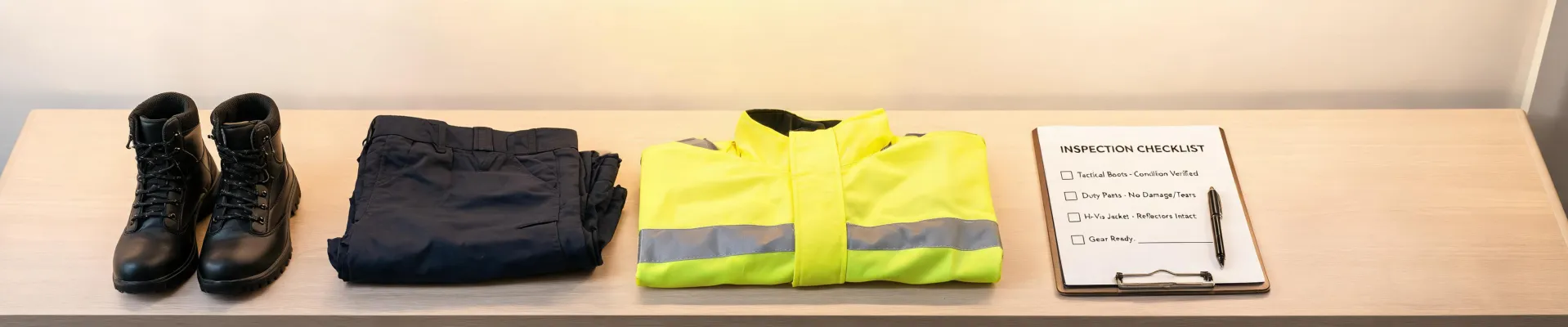
Short answer: do a receiving inspection. It's tempting to trust the brand name, and we've built quality processes around 5.11 specifically. But no manufacturer ships 4,000 perfect units every time. Our protocol: open at least 10% of boxes. Check the main seam on every jacket, the zipper tracks, and the bar-tack on belt loops. Measure a random pair of Taclite Pro pants against spec. And test closure magnets on a jacket, not just look at them. (Note to self: we caught a batch of weak magnetic snaps on the 3-in-1 in February 2024.)
If you don't have an inspector on staff, ask the vendor for a pre-shipment inspection report. If they push back, that's a red flag. An established supplier should welcome it. Put another way: the final quality check should not be 'the box feels heavy enough.' That's how a 200-unit order turns into a $7,000 headache.