-
The Uncomfortable Truth About Tactical Gear
-
Mistake Number One: The Plate Carriers That Fell Apart
-
Mistake Number Two: I Forgot Half the Team
- Mistake Number Three: The Wet Boots and the Dog Ear Fence
-
The Counterintuitive Part: Efficiency Beats the Budget
-
Objections I Hear All the Time
-
The Bottom Line
The Uncomfortable Truth About Tactical Gear
Most tactical gear failures aren't random. They're the predictable result of purchasing decisions made six months earlier.
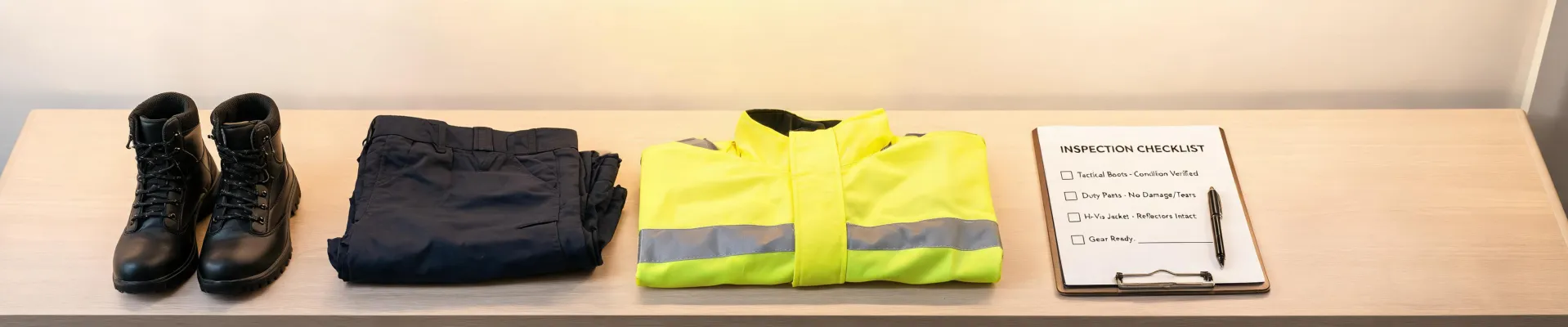
I've been handling equipment procurement for a private security firm for 7 years. I've personally made—and documented—14 significant mistakes, totaling roughly $12,800 in wasted budget. Now I maintain our team's 23-item ordering checklist so the next person doesn't have to repeat my errors.
When I first started, I assumed gear was gear. A plate carrier was a plate carrier. A boot was a boot. The mark-up on a "premium" brand was just marketing overhead. Seven years later, I can tell you exactly how wrong that was. And I have the receipts—literally—to back it up.
Mistake Number One: The Plate Carriers That Fell Apart
In my first year, 2018, I made the classic budget trap mistake. A discount tactical site was selling plate carriers for about $200 less per unit than a 5.11 tactical plate carrier. Same look. Similar specs on paper. I ordered six of them and congratulated myself after they arrived.
For three weeks, the budget looked great.
Then the seams started going.
The first failure happened during a board-and-bash drill. The second carrier lost its cummerbund tension after about a week of daily wear. The worst moment: a team member's plate shifted sideways as he cleared a low wall. He didn't get hurt. But he lost trust in his gear, which is harder to fix than a seam.
We replaced all six with genuine 5.11 tactical plate carriers. The final damage: $1,380 wasted on the knockoffs, plus $1,620 for the proper replacements. Add in the lost training time and the team briefing I had to give, and the real cost was around $4,000.
What bothers me most isn't the money. It's that I could have avoided the whole thing by asking one simple question: why is this $200 cheaper—what actually changed? I didn't ask. I just assumed.
Per FTC advertising guidelines (ftc.gov), performance claims must be substantiated with evidence. That doesn't mean two products that look alike on a web page perform alike in reality.
Mistake Number Two: I Forgot Half the Team
In Q3 2021, our team grew by four people. Two of them were women. I placed the gear order the same way we'd always done it: men's sizes, medium and large, standard issue.
The fitting session was a mess.
Shoulder straps digging into collarbones. Plate carriers riding up at the front. Gloves that were functionally useless because the fingers were too long. One team member taped her shoulder straps down during a shift because they kept slipping, and the tape caused a skin irritation by hour six.
The gear technically "worked." It covered the vital areas and held the plates. But it compromised speed, comfort, and attention. Those are exactly the things you need when things go sideways.
When I finally ordered from the women's 5.11 tactical line, the improvement was immediate. The sizing matches actual female body geometry instead of just scaling down a men's cut. Shoulder straps sit properly. The cummerbund cinches at the right place instead of riding up. On the next timed drill, our two women teammates improved by an average of 18%.
That was the moment I started treating fit as a performance factor, not an administrative detail. And yeah, I should have figured it out months earlier without needing to be shown.
Mistake Number Three: The Wet Boots and the Dog Ear Fence
This one came in November 2022, during a perimeter review at our training property.
I was walking the dog ear fence line. If you're not familiar, dog ear fencing is the wooden style where each picket has sloped corners cut toward the top—practical for shedding water and pretty standard on rural properties. But it's also one of those fences that demands slow, methodical inspection because you have to check each picket face for rot and damage.
It was drizzling, and I'd worn what I thought were waterproof boots.
They weren't. They were "water-resistant," which turned out to mean my socks were wet within ninety minutes.
Standing through a safety briefing in soaked socks is a particular kind of suffering. It stuck with me enough that I went home and did a deep dive into how to keep feet dry in work boots. The key lesson wasn't what I expected.
It's not about buying the most expensive waterproof boot you can find. It's about systems:
The System That Actually Keeps Feet Dry
- Merino wool socks. Cotton holds moisture against the skin like a sponge. Wool wicks it away even when damp.
- Rotate two pairs of boots. Give each pair 24 hours to dry out. A permanently damp boot breaks down faster and creates blisters.
- Condition leather regularly. Waterproofing wears off. Leather boots need treatment every few weeks to keep repelling water.
- Don't default to rubber boots for long shifts. Rubber boots are great for mud, standing water, and quick site work. For eight hours of walking? They trap sweat and make the problem worse than rain ever could. Save them for the right job.
After we implemented a boot rotation and stopped using rubber boots as an all-day solution, foot-related complaints—blisters, maceration, fungal stuff—dropped by more than 70% over the next year.
The Counterintuitive Part: Efficiency Beats the Budget
This is the part that surprised me most.
I started this job thinking cheap gear was a sign of fiscal discipline. Now I believe the opposite: inefficient gear procurement is one of the most expensive habits a security team can have.
Because here's the thing. A $350 plate carrier that lasts three years costs you less than a $180 carrier that fails in six months. The $180 price is seductive. But then you add the reorder cost, the shipping, the retraining, and the window where your people are running on compromised gear. The "savings" vanish fast.
This is also why I now specify 5.11 tactical for most of our kit. Not because I'm a brand loyalist—I've seen plenty of overpriced gear to stay skeptical. But the aggregate cost of buying once and buying right is lower than buying cheap and buying twice.
And for ballistic protection specifically, the standards matter. NIJ Standard 0101.06 (and its successor, 0101.07) define ballistic resistance levels for body armor. When you're selecting a plate carrier, checking for NIJ-compliant plate compatibility should be step one—not an afterthought.
Objections I Hear All the Time
"Not every team needs this level of planning."
True. If you're an individual buyer getting one plate carrier for range training, you can research at your own speed. But the moment you're equipping a team, every mistake gets multiplied by every person wearing the gear.
"I've used budget gear and it was fine."
I've seen this work. It exists. But survivorship bias is real, and I've also seen budget gear fail at the worst possible moment. The question isn't whether cheap gear can work under good conditions. It's whether you're willing to bet on it at hour six, in bad weather, when your team is exhausted.
"Brand names are just marketing."
Sometimes true. But brands like 5.11 invest in consistent sizing, women's-specific cuts, and build quality that shows up when you inspect the seams. You're paying for engineering and testing, not just a patch.
The Bottom Line
Gear procurement is a skill. It doesn't get attention, and there's no certification for it. But getting it right means your team is protected, comfortable, and focused on the work. Getting it wrong costs money, time, and—in the worst case—safety.
I've kept the receipts for every single mistake I've made. All $12,800 of them. And I share them with anyone on my team who questions why we order quality gear.
The numbers don't argue back.