It Was 3 AM, and Everything That Could Go Wrong Did
I’m a paramedic supervisor for a medium-sized EMS agency in the Midwest. In March 2024, we got a call to a commercial building fire alarm activation. Standard stuff—except it wasn’t. By the time we rolled up, the building’s sprinkler system had already kicked on, water was pooling in the lobby, and the alarm was still screaming. My crew had to enter through a side alley blocked by a black aluminum fence—the kind that looks nice but is a pain to climb over when you’re carrying 40 pounds of gear.
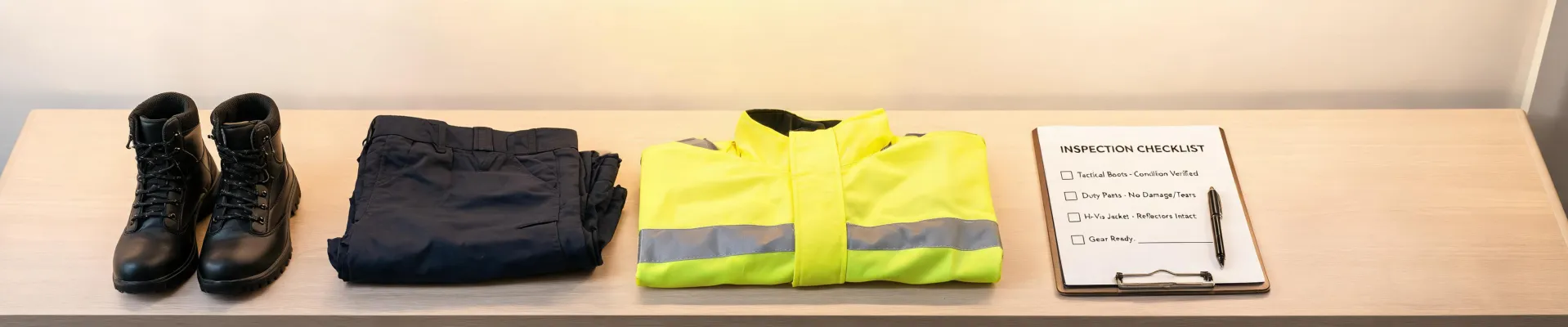
That night, I was wearing my go-to uniform: 5.11 tactical pants (the Defender-Flex model, if you’re curious) and a Milwaukee Bolt hard hat I had grabbed from the truck. My partner was in his Stryke PDU pants. We both swore by 5.11 for the durability and pocket layout. The situation looked bad, but we’d handled worse.
Then the fire alarm system went silent—not because the fire was out, but because the panel had a glitch. And we had to figure out how to turn off a fire alarm that was still technically sounding elsewhere in the building. That’s when the real lesson started.
The Turning Point: A Dead Battery and a Missed Step
I always carry a multi-tool and a small screwdriver in my 5.11 vest. But the alarm panel’s reset key was missing. The building manager was home, 20 minutes away. The fire department was still en route. We couldn’t just let the noise continue—it was disorienting, and we needed to assess the actual smoke source.
I remembered a trick from a training years ago: some alarm panels have a backup battery disconnect that silences the audible horn. I pulled off my Milwaukee Bolt hard hat (thankfully I had purchased one after a near-miss with a falling ceiling tile the previous year) and used the brim to pry open the panel cover. Inside, the backup battery was corroded—clearly never replaced. The building had failed its own maintenance schedule. I disconnected the battery, and the alarm stopped.
But here’s where my cheap instinct cost me: I had considered buying a standard hard hat from a hardware store for $20 instead of the Milwaukee Bolt at $45. The Bolt has a ratcheting suspension and a built-in chin strap that keeps it secure when you’re bent over working. The cheap one would have slipped off, or worse, shattered if that ceiling tile had actually hit me. Cost of the short-sighted “save”: $20. Cost if I had needed head protection: probably a concussion.
The Aftermath: What I Learned About Gear and Process
We located the source of the alarm—a burnt-out toaster in a break room. No actual fire, just smoke. But the false alarm disrupted an entire building’s night shift, cost the company an estimated $3,000 in lost productivity, and revealed a critical vulnerability: no one knew how to turn off a fire alarm properly.
My partner, who was wearing 5.11 tactical pants EMS (the ones with the hidden knee pad pockets), had to crawl through a narrow utility chase to verify the smoke condition. Those pants saved his knees. I’m not saying you need a full 5.11 kit to do the job, but when you’re in the field, the difference between “good enough” and “reliable” can be measured in seconds.
I also learned that the building’s black aluminum fence was technically a security hazard—it delayed our entry by almost 90 seconds while we found a key. That bought time for the situation to escalate. In emergency response, 90 seconds is the difference between controlling a smoke event and having a full fire department deployment.
Industry Evolution: The Old Rules Don’t Always Apply
Five years ago, we used to carry everything in bulky bags. Now, with modular vests like 5.11’s, we can distribute weight and access tools faster. The Milwaukee Bolt hard hat is a recent adoption in our agency—when I started, hard hats were all yellow plastic from the 1980s. They worked, but they didn’t integrate with radios and lights.
What was best practice in 2020 may not apply in 2025. The fundamentals—scene safety, rapid assessment, clear communication—haven’t changed. But the tools have evolved. Today, if you’re looking for 5.11 tactical stores near me, you’ll find a lot of options online, but I recommend visiting a physical store to try the sizing. The pants fit differently depending on the model; the Defender-Flex and Stryke PDU have different waist rise and cargo pocket placement.
And please, before you need to use it, learn how to turn off a fire alarm in your building. I’m not 100% sure about all models, but the general steps are: locate the panel, check for a key or disconnect switch, and use the manual reset procedure. Don’t hold me to this, but most modern panels have a “silence” button that stops the horn without resetting the entire system. Verify current regulations at NFPA.org.
Practical Takeaways for Safety Professionals
- Invest in gear that fits your specific role: EMS crews need pants with knee pad pockets and quick-access thigh pockets. 5.11 offers both in their EMS-specific line. For head protection, the Milwaukee Bolt hard hat is lightweight and ANSI-rated; worth the extra $25 over a basic model.
- Don’t trust alarm systems to work as intended: Batteries die, keys go missing. Have a plan B for silencing the alarm that doesn’t involve breaking the panel.
- Review your scene access: If your facility has decorative fences (even black aluminum ones), consider installing a gate that can be unlocked from the inside during emergencies.
- Update your SOPs: Based on our experience, we now require all supervisors to carry a fire alarm reset kit in their 5.11 backpack. Cost: about $30 for keys and tools. Potential savings: hours of downtime.
This whole incident could have been avoided if the building manager had done a simple annual maintenance check. But it wasn’t. And because we had the right gear and a bit of quick thinking, we handled it without injury. Could we have done better? Absolutely. But we also learned what to improve.
One Final Thought
I can only speak to my experience in domestic EMS operations. If you’re dealing with industrial hazmat scenarios or international logistics, the calculus might be different. Your mileage may vary if you work in a different environment or use different vendor gear. But the principle stands: test your equipment under pressure before you need it. And never assume you know how to turn off a fire alarm until you’ve actually done it.
Pricing as of Q1 2025; verify current rates. Gear mentioned includes models from 5.11 Tactical and Milwaukee Tool.