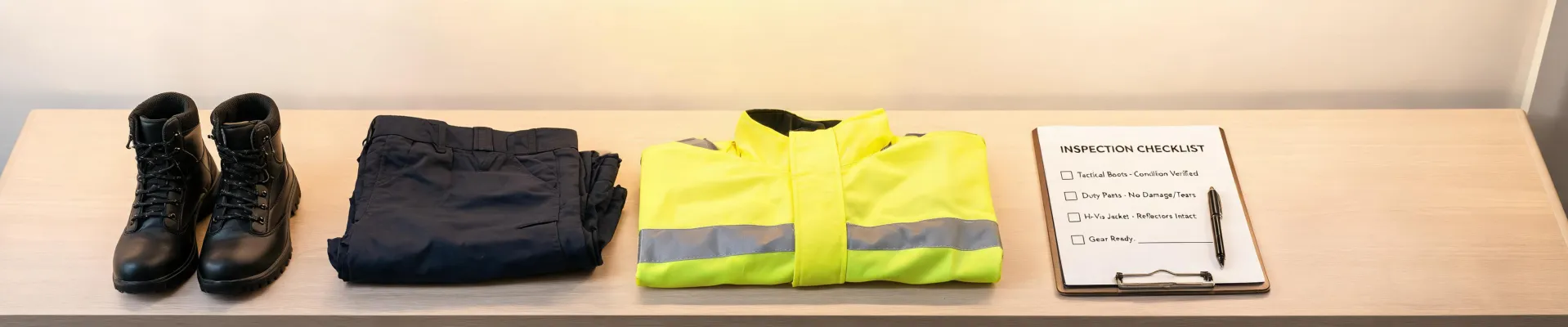
Why I Had to Fix Our 5.11 Tactical Ordering Process
If you've ever managed a bulk order for tactical gear—say, equipping a new security team or restocking for a training cycle—you know the feeling. You place what looks like a solid order, and then the surprises start. Wrong sizes. Missing items. Shipping fees that somehow double the total.
I'm the office administrator for a multi-location security company. I manage about $200,000 annually in equipment orders across 8 vendors. Trust me on this one: not all ordering processes are created equal. Our 5.11 Tactical orders used to be a headache until I built a repeatable checklist. Now it's smooth. Here's exactly what I do, step by step.
Quick note: This checklist is for bulk B2B orders for a team. If you're just buying one pair of pants for yourself, some steps won't apply. Prices here are as of January 2025 from 5.11tactical.com.
The 5-Step Bulk Ordering Checklist for 5.11 Tactical
Step 1: Verify Your Specs (Don't Guess)
The biggest mistake? Assuming the model from last year is still available. Product lines change. The 5.11 Tactical Men's Apex Pant, for instance—great piece of gear. But the color codes or sizing runs might shift between production batches.
This is where I learned a hard lesson. I knew I should get current SKUs directly from the site, but thought 'our master list is fine.' Well, I ordered 30 pairs of pants based on a 2022 internal spreadsheet. Ten of them had been discontinued in that color. Cost us a restocking fee and a delay. Now I always verify specs against the current product page before sending the PO.
My checklist item here: Open the product page for every single line item. Check the SKU, color name, and size chart. Don't rely on memory.
Step 2: Ask 'What's NOT Included?' (The Hidden Cost Trap)
I've learned to ask 'what's not included' before 'what's the price.' The vendor who lists all fees upfront—even if the total looks higher—usually costs less in the end.
With 5.11 Tactical headquarters location (I usually order online through their B2B portal or authorized resellers), the quoted price is rarely the final price. You need to inquire specifically about:
- Setup or customization fees: Need your company logo on a backpack? That's extra.
- Shipping for large/heavy items: Body armor, steel toe boots—these have different freight costs.
- Minimum order quantities (MOQs): Some items, like specific glove sizes, might have MOQs.
Our company added a new team in July 2024. I had to order a mix of soft armor and hard hats. The first reseller quoted a great price on the armor but didn't mention that shipping hazmat materials (body armor components sometimes fall under this) would be an additional $180. The surprise wasn't the price difference; it was that the 'cheaper' option had a hidden cost that made it more expensive overall. To be fair, the second vendor was transparent from the start—I went with them.
Step 3: Sizing Isn't Guesswork (Get Their Measurements)
This is the step most people rush. For gear like the 5.11 Tactical Men's Apex Pant or a load-bearing vest, size charts are a starting point, not a guarantee. We had an incident in early 2023 where I ordered 'Medium' pants for a team based on their stated waist size. Five pairs didn't fit because the cut was for athletic build, not the officer's frame.
Here's what I do now: I send a simple email or form to each team member asking for their exact measurements (waist, inseam for pants; chest for jackets/vests; hat size for helmets). I also ask them to try on a sample if we have one. Then I cross-reference with the specific product's size guide—not a generic one.
Also, for items like steel toe boots (I've ordered a ton of those), fit is critical. I always recommend ordering one size up if they're between sizes or if they'll wear thick socks. Nothing worse than a pair of boots that pinch on the first day of training.
Step 4: Check for Product Availability & Lead Times
This sounds obvious, but you'd be surprised. A product shows as 'in stock' on the website, but that might be for single-unit orders. For a bulk order of 50 body armor plates, availability can change. Use the bulk query function on the 5.11 Tactical B2B site or call their sales team directly. I do this before I finalize the PO.
Take this with a grain of salt: I once assumed a standard lead time of 5-7 business days for backpacks. The reseller's order system showed 'available,' but it took 15 days to ship because it was coming from a different warehouse. The moral? Confirm the estimated ship date in writing for the total quantity.
Step 5: Verify Invoicing & Compliance Details (The Boring but Vital Step)
Our accounting department requires a specific PO number, net-30 terms, and a W-9 form from any new vendor. Not all resellers can handle this. The vendor who couldn't provide proper invoicing cost us $2,400 in rejected expenses one year because their receipts were handwritten.
This step is about protecting your department. Before you approve the purchase, confirm:
- Can they invoice with your PO number?
- Do they accept your payment terms? (Net-30, credit card, etc.)
- Are their products compliant with local/industry standards? For example, ANSI-rated hard hats, NFPA-compliant body armor, or ASTM-standard steel toe boots. Request the certification documents upfront.
Skipping this 'safety step' because it 'never matters' is a risk. That was the one time it mattered for me—a new reseller couldn't provide proper compliance docs for the body armor, and our safety officer rejected the entire shipment. $5,000 worth of gear, delayed three weeks.
Final Notes & Common Pitfalls
One more thing: If you're ordering body armor, know that the seller needs to be authorized by the manufacturer. Some carriers will only warranty the vest if it's sold through an authorized dealer. 5.11 Tactical has a list of approved distributors on their site. Always source from that list to avoid counterfeits or warranty issues.
Also, for steel toe boots—I learned from a reseller that the safety rating (like ASTM F2413) can vary by model. Double-check that the specific boot you're ordering meets your team's required safety standards. Don't assume 'all 5.11 boots are safety-rated.' They aren't.
Finally, for smaller accessories like how to lace up work boots—it's a common question. The technique matters for fit and comfort. I've found that using a 'heel lock' lacing method (extra lace loop at the top) prevents blisters on long shifts. It's a small thing, but it matters for the team.
This checklist isn't perfect for every situation, but it's saved me from a ton of headaches. If you've ever had a bulk order go sideways, you know the value of a solid process.