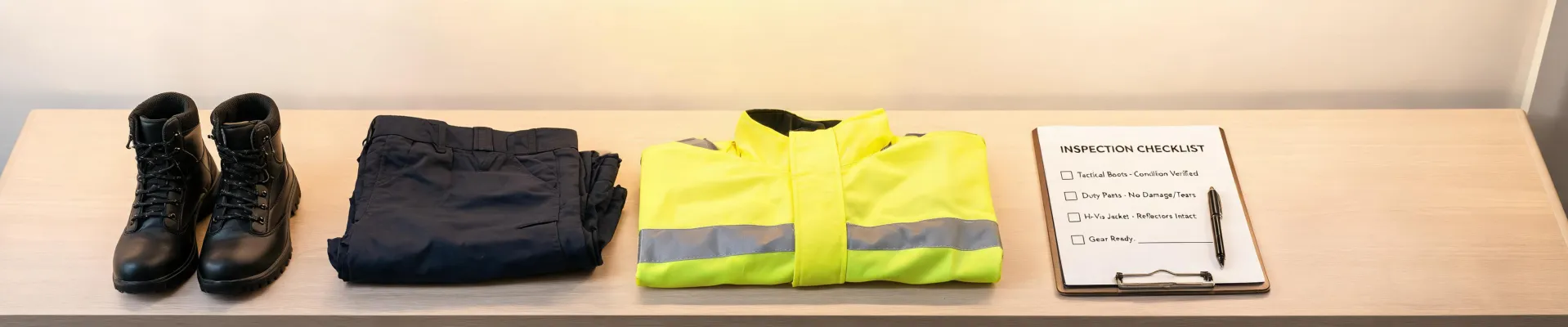
It Started with a Simple Order
Back in 2022, I was handling a small contract for a security startup. We needed 5.11 tactical boots for women, some class E hard hats, and a few bump caps for the warehouse team. Order total: $3,200. Not huge, but meaningful for a young company.
I focused on what I thought mattered: price, delivery time, sizing accuracy. The classic mistake. The question I didn't ask? Who is responsible for training workers on the use of PPE?
Look, I assumed it was common sense. You buy gear, you hand it out, everyone knows how to wear it, right? Wrong. Dead wrong.
The Surface Problem: Everyone Points Fingers
When our first on-site inspection flagged three employees wearing their bump caps backwards and a pair of 5.11 boots with loose laces (trip hazard), the safety officer came to me. "Who trained these guys?"
I checked the purchase order. No training line item. I called the vendor. "We're a distributor, not a training center." I called the client's HR. "We thought the gear came with instructions."
The finger-pointing circle was complete. Nobody owned it.
That's when I learned a bitter lesson: the question isn't just about compliance — it's about who pays the price when something goes wrong.
The Deeper Reason Why Most Companies Get It Wrong
Here's the thing most buyers miss. When you search for "who is responsible for training workers on the use of PPE?" the answer from OSHA (29 CFR 1910.132) is crystal clear: the employer. Not the manufacturer, not the distributor, not the employee themselves. But in practice, that responsibility is rarely spelled out in the purchase contract.
Most procurement teams — especially small ones — operate on an unspoken assumption. They see a 5.11 tactical promo for boots and vests, they order, they assume compliance comes in the box. It doesn't.
The surprise wasn't the price difference between a $35 bump cap and a $60 class E hard hat. The surprise was that nobody had budgeted a single dollar for training.
(Circa 2023, I started asking vendors directly: "Do you provide any training materials or certifications?" Most said no. A few offered a PDF. None offered a complete solution.)
The Real Cost of Ignoring This
Let me give you three numbers that hurt:
- $890 – The cost of re-doing an entire order because the wrong bump caps were used (we had to rush-ship class E hard hats for a site that required full electrical insulation).
- 1 week delay – The time it took to arrange a last-minute training session after the inspection failure.
- Lost trust – The client's safety manager told me, "I can't recommend you again if this keeps happening."
And here's the kicker: that $3,200 order was small by industry standards. If I had made the same mistake on a $30,000 order? The domino effect would have been catastrophic.
I dodged a bullet only because the incident was caught before any serious injury. But I was one misplaced hard hat away from a recordable incident — and possibly a lawsuit.
The Short (But Powerful) Solution
So what do you actually do? Two things:
- Before every PPE purchase, ask the vendor explicitly: "What training support do you provide? Any video, manual, or on-site session?" Even if the answer is "none," you've flagged the gap.
- Build training into your budget. For a small order like mine, it cost about $200 to hire a safety consultant for a 2-hour session. That's nothing compared to the cost of non-compliance.
And here's the part that aligns with my personal philosophy: don't let suppliers treat your small orders like they don't matter. I've since switched to vendors who proactively include a compliance checklist with every shipment — regardless of order size. Today's $500 order could be next year's $50,000 contract.
So next time you're looking at 5.11 tactical boots for women or a class E hard hat, stop before you click "buy." Ask yourself: Who's going to train the people who wear this? If the answer isn't clear, you've found the problem.
And if you're the one responsible — congratulations, you're now the safety officer. Wear the title proudly, and make sure every boot is laced right the first time.