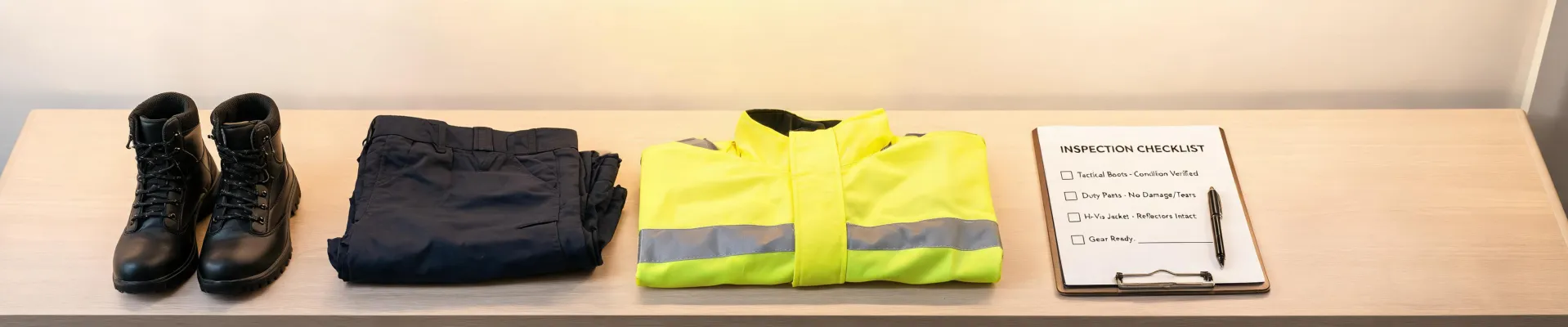
The Wrong Way to Buy Gear
When I first took over equipment procurement for my unit in 2019, I had a simple philosophy: find the cheapest option that meets the minimum specs. That approach lasted about two months.
I ordered 30 pairs of what I thought were 'tactical-adjacent' boots from a discount supplier. They looked fine in the product photos. The price was 40% less than the 5.11 tactical hiking boots I'd originally spec'd. I felt like a hero.
Two weeks later, three pairs had the sole separating from the upper. By week six, we had 12 failures. The vendor's 'warranty' was just a redirect to a contact form that never got answered.
That mistake cost us roughly $2,100 in replacements plus the lost time. Not ideal. But I didn't learn the lesson yet.
What I Was Missing
I kept repeating a version of that initial error for the next 18 months. I'd find a 'deal'—maybe on gloves, maybe on a batch of tactical quarter zips—and it would work for a while. Then something would fail. The stitching on a pair of mens leather gloves would give out. The zipper on a 5.11 tactical quarter zip knockoff would jam at the worst possible moment.
The pattern was clear in hindsight: I was comparing purchase prices instead of total cost of ownership. But at the time, I just thought I was unlucky.
It took me 28 months and about 150 orders to understand what I should have realized from day one: the cost of a piece of gear isn't what you pay for it; it's what you pay for it, plus what you pay when it fails.
Because here's the thing about tactical equipment—it's not just gear. When a boot fails during a training exercise, it's not a 'return.' It's a disruption. When gloves shred on a job site, it's not a 'defect.' It's a safety issue. The cost of failure multiplies fast.
I saved $80 per pair on boots that ended up costing $210 each when you factor in replacements, admin time, and the inconvenience to the team. The 'bargain' was a net loss.
The Hidden Price Tag
Let me put some numbers on this, because it's the part I never considered when I was chasing low quotes.
The Direct Costs
On that first boot order, I saved $1,250 upfront vs. going with 5.11. But then:
- $900 to replace the 12 pairs that failed within 2 months (and these replacements were a different brand, which cost the same—not a 'deal')
- $600 in additional shipping and handling for the rush replacements
- $350 in admin time—ordering, processing returns, dealing with the vendor
Total: $1,850 over the initial 'savings.' I was $600 in the hole and we had mixed-quality gear in circulation. A mess.
The Indirect Costs (The Ones Nobody Tracks)
This is where it gets ugly. We had:
- Lost training time when gear failed mid-exercise
- Trust erosion—the team stopped trusting my equipment choices
- Morale cost—wearing gear that looks worn out after 3 weeks
Try putting a dollar figure on 'the team doesn't trust your judgment.' That $600 net loss became $2,000+ when you factor in the friction it created.
The Lesson That Stuck
In the middle of 2022, I decided to run an experiment. I purchased two identical batches of gear for a new team: one from 5.11 (the 'expensive' option) and one from a budget vendor that everyone in the procurement group was recommending.
The 5.11 5.11-tactical quarter zip? Flawless. After 6 months of weekly wear, still looked new. The cheap version? Faded after 2 washes, pilling after 4. The 5.11 tactical hiking boots? Zero failures in 8 months. The discount boots? 5 failures in the same period on a smaller sample.
In 18 months, I've tracked 3 returns on well over 200 5.11 items we've purchased. Our previous budget vendors averaged about 8-12% failure rates. That difference alone covers the price premium.
It's not just the failure rates, though. It's the consistency. When you buy from a brand that has a proper supply chain—like 5.11—you don't have to worry about inventory disappearing. You don't have to wonder if the 'same' product will look different in the next batch. You don't have to spend time vetting every single order.
I still buy some items from budget vendors. But I've learned to be strategic about it. For core items—boots, outerwear, bags, gloves—I go with the established brand. For consumables or things where failure isn't critical, I'll take a gamble.
My rule now: never skimp on anything that has to work without warning.
How to Think About This (A Quick Framework)
If you're the person buying gear for a team or a department, here's the mental shortcut I wish I'd had from day one:
- Identify your 'critical' items. Anything that's used for safety, durability, or performance in the field. Boots. Gloves. Bags. Outerwear. Fire extinguishers (yes, we went through a lot of cheap ones—and learned that, for instance, is a fire extinguisher toxic? Only if it's a bad one that leaks. Another story.)
- Calculate total cost over 12 months. Include replacements, admin time, and team inconvenience. Not just the purchase price.
- Buy from brands that have a reputation for consistency. 5.11 isn't the only option, but it's one that I've personally verified across hundreds of orders.
That's it. The rest is just execution.