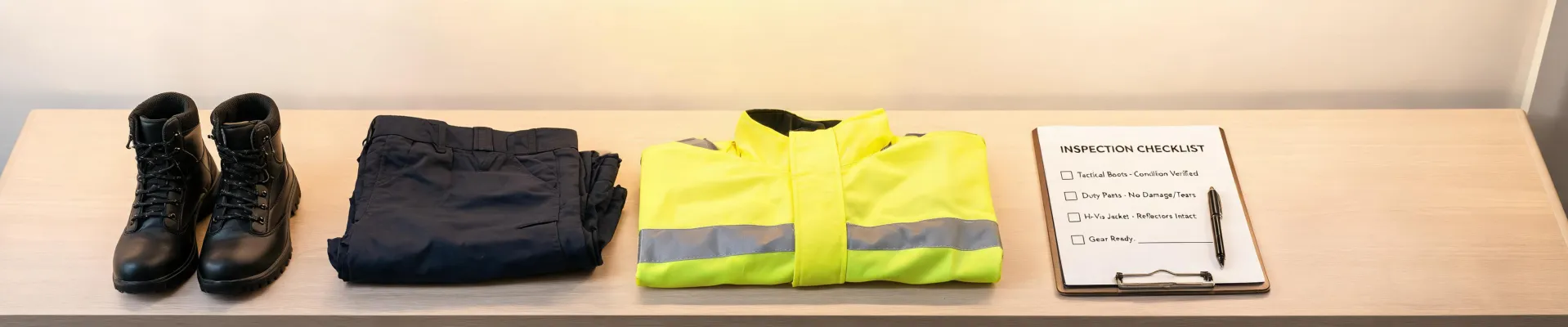
I'm a quality and brand compliance manager at a tactical equipment distributor. I review every product that crosses our docks before it reaches the customer—roughly 200 unique SKUs a year, everything from 5.11 tactical apparel to fire extinguishers. In 2024, I rejected 14% of first deliveries from vendors. Not because our vendors are sloppy. Most of them do solid work. But because a surprising number of defects are completely avoidable if the verification happens at the right point. That's not a guess; it's a pattern I've watched repeat for four years.
Here's my position, plainly: prevention is not a quality-department buzzword. It's the only strategy that reliably keeps bad gear out of the field. When a product fails, someone skipped a spec check that would have taken twenty minutes. In my experience, the expensive failures—the ones that cost customers time, money, or credibility—rarely happen because a supplier was malicious. They happen because verification was treated as optional. This isn't a theory. It's a receiving dock full of returned batches and a notebook full of lessons.
Sizing specs exist for a reason—especially in big and tall
In March 2024, we received a 500-pair order of 5.11 tactical pants in big and tall sizes, bound for a federal agency customer. The contract specified a 34-inch inseam, measured from the crotch seam to the hem, with a tolerance of ±0.25 inches. I pulled a sample of twelve pairs across all sizes. Average inseam: 33.1 inches. The waistbands were fine. The ripstop fabric was right. The reinforcement stitching looked solid. But the inseams were short across the board—not dramatically, just enough to be felt after an hour of wear.
The vendor's response was predictable:
"That's within industry standard."
Maybe it was. But our contract wasn't based on "industry standard." It was based on a number that the agency, after their own field trials, had determined to be necessary. We rejected the batch. They redid the cutting at their cost, and every contract since has included a sampling protocol with specified measurement points and a 0.25-inch tolerance.
Big and tall sizing is where consistency matters most. When you're producing a 34-inch inseam for a 6'4" officer, an inch of variance isn't a style quirk—it means the pant rides up, the blousing sits wrong, and the person spends a shift pulling at their pants instead of doing the job. You can't see that in a product photo. You can't tell from a sample that looks fine in the box. You measure it, before it ships.
The Skyweight chest pack zipper incident
Everything I'd read about material verification said to check finishes, not just part numbers. In my head, I understood it. On the dock, I didn't practice it—until a vendor made me pay for that gap.
In November 2023, a new supplier sent us zipper pulls for the 5.11 Tactical Skyweight Survival Chest Pack. The spec sheet called for anodized aluminum. What arrived was powder-coated aluminum. To the eye, they're nearly identical—same shape, same size, same matte gray finish. Powder coating, though, can hide a brittle casting. Anodizing is more honest about what's underneath. We assembled 200 chest packs. Visual inspection? Clean. Then a technician ran a tension test on a sample of sixty pulls. Thirty-seven snapped.
That quality issue cost us about $800 in replacement parts and a week of rework (which, honestly, was the week we'd planned for a product launch). I think about that week a lot. The failure wasn't visible in the final product. It only showed up when the product was tested against a specification I knew about and didn't enforce.
We didn't have a formal incoming-component verification process before that batch. Now we do. Every component, from zipper pulls to webbing, gets a material identification check against the spec sheet before it's cleared for assembly. It added ten minutes to the receiving process. It has saved us an estimated $8,000 in potential rework since.
Verify the standard before you choose the product
The least obvious part of prevention happens before a product is even selected. I'm talking about verifying the standard you're buying against. This comes up in two questions I hear constantly.
First: "Is a Class K fire extinguisher right for our kitchen?" Class K, per NFPA 10 (the current edition, published 2022), is the classification for fires involving cooking oils and fats—commercial kitchens, deep fryers, the kind of fire that water makes worse. If that's the environment, a Class K unit is the right call. But the classification only works if the hazard actually matches. We've had customers ask for a Class K unit for a workshop full of flammable liquids—that's a different hazard class entirely. The right move is to walk them through the classification before they spend money. Get the standard right first; the hardware follows.
Second: "Is body armor good for kids?" I get why people ask. But it's not a yes/no question, and I don't trust anyone who answers it that quickly. NIJ ballistic resistance standards (the National Institute of Justice rating system, updated in 2023 under NIJ Standard 0101.07) define protection by threat level—which rounds, at which velocities, the panel stops. They don't define an age range. So a responsible answer starts with prevention: what's the actual threat scenario? Does a panel exist that fits the child's torso correctly? Is the buyer clear on what the armor can and cannot do? If those questions haven't been verified, the armor is just a product with a rating. The question itself is a prevention instinct. I'd rather see more of that.
The same framework applies when I see other brands in the field. Tecovas work boots, for example. Tecovas makes solid leather boots, and I've handled their work line—the construction genuinely impressed me. But a quality boot is not automatically the right boot. A site with electrical hazards requires an EH-rated boot. If you buy a boot for a ranch and wear it on a construction site, that's a specification failure, not a boot failure. Prevent it on the front end, before you order.
"But we don't have time for checks"
The objection I hear most often is that verification slows things down. And to be fair, it does take time. Measuring an inseam sample takes twenty minutes. Testing zipper pulls takes ten. Walking a buyer through a hazard classification conversation takes fifteen. That's real time.
But consider what skipping those checks actually costs. A 500-pair batch that had to be cut again. Thirty-seven zipper pulls replaced by hand. A customer who discovered their extinguisher was the wrong class during an insurance audit. I'd stack the cost of those incidents against the total time spent on every check I've ever run, and the checks win. Not even close.
5 minutes of verification beats 5 days of correction. That's not a metaphor. I had to learn it the hard way, but you don't have to.
Prevention is the product
I know "prevention over cure" sounds like something from a laminated poster in a conference room. In my experience, it's the opposite of corporate fluff. It's a specific, repeatable practice: know the standard, measure against it, reject anything that misses. That's not bureaucracy. It's the cheapest insurance you will ever buy.
I'm not arguing for inspecting every stitch of every item—that's overkill, and I've seen quality programs drown in that kind of perfectionism. I'm arguing for identifying the specs that actually matter and checking those, every time, before the product ships. Prevention doesn't make you slower. It makes you reliable. And in the tactical equipment business, reliability is the whole point. That's why I'd rather reject a batch of 500 pants now than explain a field failure later.