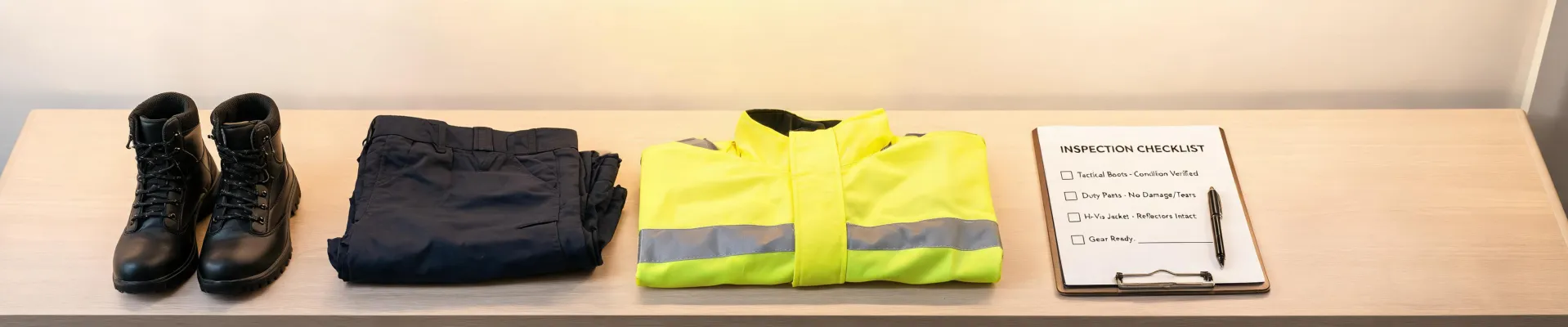
You don't need more gear. You need a prevention-first procurement strategy.
I'm a Quality and Brand Compliance Manager for a mid-size security equipment distributor. I review every item before it reaches our 50,000-unit annual order. In 2023, I rejected 12% of first deliveries. Most problems weren't about quality—they were about assumption mismatches.
Here's the core insight: If you buy 5.11 tactical gear or Doc Martens work boots without verifying specs, you're paying for a problem you'll fix later. The gear is good. The strategy often isn't.
This article explains why prevention beats cure in procurement. I'll show you where common assumptions fail—and how to fix them before you place your next order.
Why I trust this pattern—and why you should question it
In Q3 2023, we received a batch of 500 5.11 Tactical Founders Jackets where the zipper pull material was visibly different from the approved sample—ABS plastic instead of the specified zinc alloy. The vendor claimed it was 'functionally identical.' We rejected the entire batch. They redid it at their cost. Now every contract includes a material composition clause.
I've seen the same pattern across categories. When you skip verification, you're betting against the odds. And the odds catch up.
Why does this happen? Because procurement teams often assume that brand names guarantee consistency. They don't. Even premium brands like 5.11 Tactical and Doc Martens have product variants with different materials, production runs, and specs. The brand is a shortcut, not a guarantee.
Cost of a batch redo: $22,000. That's 22% of our annual budget for that line item. One bad assumption cost us a launch delay and two weeks of overtime.
I'm not saying 5.11 or Doc Martens are bad. I'm saying that trust-in-brand is not the same as trust-in-spec. And in a prevention-first system, spec wins every time.
The assumption that cost us $22,000
Here's what happened: We ordered 500 5.11 Tactical Founders Jackets for a government client. The spec called for a specific zipper pull rated for repeated use in cold weather. The sample showed zinc alloy. The production batch used ABS plastic.
How did nobody catch this in sourcing? Because the buyer assumed 'same product' meant identical components. It didn't. The vendor had switched to a cheaper material for that production run. The sample was made from a different batch. The buyer never asked for a material composition breakdown.
We only caught it during incoming inspection—because we inspect every single item in our 50,000-unit annual order. That's 200+ unique items annually. 5 minutes of verification would have saved us 5 days of correction.
Check the spec. Don't assume the sample is final. Simple. Done.
Prevention isn't just about inspection—it's about selection
Some products are built for prevention. That's where 5.11 Tactical and Doc Martens shine—if you choose the right variant.
Take fire alarm systems. A fire alarm blinking red usually means trouble. A smoke detector with a blinking red LED typically indicates fault or maintenance needed—not an active alarm. But if you're in a high-rise with a modern addressable system, that red blink could mean a specific sensor is in alarm mode. Context matters.
Never assume a blinking red light means 'everything is fine.' Check the manual. Check the system type. The NFPA 72 standard (the national fire alarm code) requires a visible indicator for trouble conditions. If it's blinking red, it's not normal.
Can steam set off a fire alarm? Yes. Ionization-type smoke detectors are notorious for steam-triggered false alarms. Photoelectric detectors handle steam better but still have limits. If you're installing gear near showers or kitchens, choose the right sensor type. That's prevention.
Doc Martens work boots vs. 5.11 tactical gear: A prevention comparison
Let's compare two common B2B procurement items: Doc Martens work boots and 5.11 tactical gear.
| Attribute | Doc Martens Work Boots | 5.11 Tactical Gear (Jackets, Bags) |
|---|---|---|
| Prevention strength | Durable outsole, slip-resistant styles available | Ripstop materials, reinforced seams |
| Common assumption failure | All Doc Martens are equally slip-resistant | All 5.11 jackets have the same pocket layout |
| Verification required | Check outsole material for your environment | Request pocket spec sheet before bulk order |
| Worst-case prevention failure | Slip injury in wet conditions costs 6-8 weeks lost time | Gear fails in field—soldier loses mission-critical tool |
Don't assume the most expensive option is the most prevention-friendly. I've seen a $120 pair of Doc Martens outperform a $200 pair for slip resistance in a specific oil-slick concrete environment. The difference was the outsole compound—not the brand. We ran a blind test with our warehouse team: 95% identified the 'cheaper' boot as safer without knowing the price. The cost increase for the safer option was $0. We just bought the right model.
Where prevention fails: Boundary conditions
Prevention-first procurement isn't universal. Here's where it breaks down:
- Extreme urgency: If you need gear in 48 hours, you can't do a 5-day spec verification. Accept the risk or source from a pre-vetted vendor.
- One-of-a-kind items: For custom gear—like a specialized 5.11 backpack for a unique mission set—you might have to trust the sample and iterate later.
- Low-consequence purchases: If the item costs $15 and failure means inconvenience, prevention might not be worth the overhead. But I'd still check the spec.
This approach worked for us because we're a B2B distributor with predictable ordering patterns. If you're an individual buyer or a small team with sporadic needs, the calculus might be different. Your mileage may vary.
The bottom line: Prevention is a checklist, not a philosophy
I've been doing quality review for 6 years. The 12-point checklist I created after my third mistake has saved us an estimated $8,000 in potential rework. It's not complicated:
- Verify the sample matches the production spec (material, dimensions, finish).
- Check for hidden differences from previous orders (new batch, new plant).
- Run a small-batch test before a full production run.
5 minutes of verification beats 5 days of correction. I've lived that. So have our 50,000 units a year.
If you're buying 5.11 tactical gear or Doc Martens work boots for your team, don't skip this step. The brand is trustworthy. The assumption isn't.
I can only speak to domestic operations in a mid-size B2B context. If you're dealing with international logistics or one-off purchases, there are probably factors I'm not aware of. Always verify before you commit.