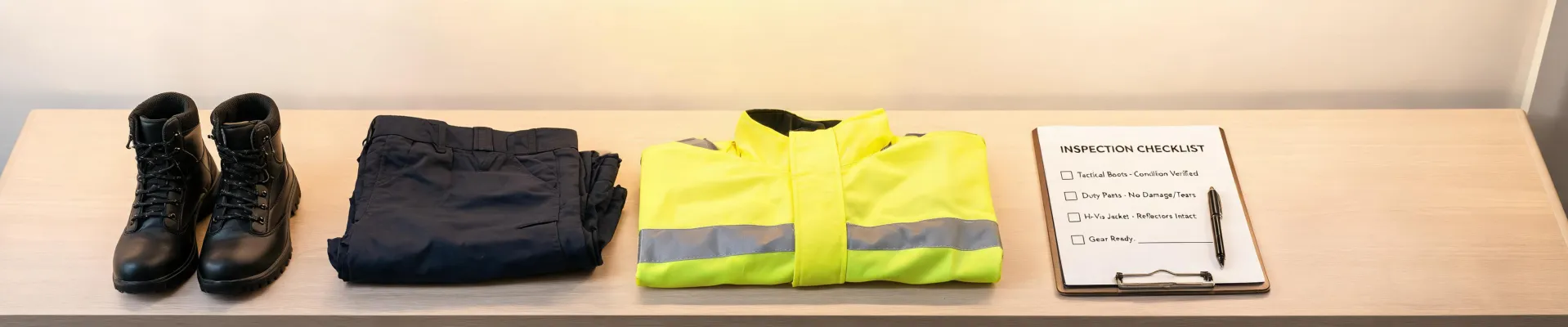
Stop treating your gear budget like a gamble
I've been handling 5.11 tactical orders for procurement teams—and occasionally my own kit—for about six years now. And I've personally made (and documented) fourteen significant ordering mistakes, totaling roughly $3,200 in wasted budget. I'm the guy who now maintains our team's pre-purchase checklist so others don't repeat my blunders.
Here's my blunt take: if you think you're saving money by skipping fit checks or ignoring spec sheets, you're probably losing more than you think. That's not a sales pitch. That's a math problem I've learned the hard way.
Mistake #1: The "bail out bag" that was a waste bag
In September 2022, I ordered a 5.11 tactical bail out bag for an emergency response team. On paper, it checked every box: MOLLE webbing, multiple compartments, rugged nylon. I approved the order without a physical sample—$189 each, twelve units. Total: $2,268.
When the bags arrived, the main compartment was just too shallow for their standard medical kit. The difference was maybe 1.5 inches. But that meant the kit didn't close properly, and in a real situation, that could mean seconds lost. We couldn't return them because the order was custom-patched. $2,268—maybe $2,300 after shipping—went to storage.
I knew I should have checked the internal depth against their actual loadout, but thought, "5.11 is a reputable brand; what are the odds?" Well, the odds caught up with me when the team lead sent me a photo of the bag with the med kit half-hanging out.
Mistake #2: The boots that fit fine—until they didn't
I went back and forth between the 5.11 tactical A.T.A.C. 2.0 6'' side zip boot and a competitor's model for nearly three weeks. The A.T.A.C. offered better ankle support on paper; the competitor had a wider toe box. On paper, the 5.11s made sense. But my gut said our security team preferred more toe room for long shifts.
I ignored my gut. Ordered thirty pairs of the A.T.A.C. 2.0 side zips. Within two months, three officers reported hot spots and one filed a complaint about blisters. The problem? The arch height didn't match the team's typical foot shape—a detail I'd never even thought to check. We ended up swapping eighteen pairs for a different model. Re-stocking fees and shipping cost us roughly $450—plus the embarrassment of telling the team their new boots weren't working.
The lesson? Fit isn't just about size. It's about shape, use case, and shift duration. Five minutes of asking the right questions would have saved me $450 and a credibility hit (this was back in early 2023, and I still get teased about the "boot incident").
Mistake #3: The smoke detector that went off—at the worst time
Here's an odd one. I once ordered smoke detectors for a facility's upgrade—not a 5.11 product, but part of a broader procurement. The detector was a standard model, but we needed it to integrate with an older alarm panel. I approved the order based on a compatibility list. When they arrived, the wiring was wrong for our panel. $890 in redo costs plus a 1-week delay—during a safety audit.
This taught me a principle that applies directly to tactical gear: spec compatibility is not optional. Just like a smoke detector that goes off randomly because it's wired wrong, a 5.11 tactical bail out bag that doesn't fit your gear isn't a bag—it's a liability.
The same logic applies to latex gloves (yes, I've messed up glove orders too—wrong thickness, wrong size, wrong chemical resistance), or a horizontal fence mount that doesn't match the railing diameter. Every time I skipped spec verification, I paid for it.
Why I now swear by the 12-point checklist
The 12-point checklist I created after my third mistake—the boots—has saved us an estimated $4,200 in potential rework over the past 18 months. We've caught 47 potential errors using it. 47. That's 47 orders that didn't turn into headaches.
Here's the abbreviated version for tactical gear purchases:
- Verify internal dimensions against actual loadout (not advertised specs)
- Check arch height and toe box for the user population
- Test with the intended accessories (pouches, plates, comms)
- Review warranty and return policy before ordering
- Confirm compatibility with existing systems (holsters, belts, mounts)
- Request a sample unit for high-volume orders
- Check recent reviews—specifically for fit or quality issues
- Note the lead time and buffer for delays
- Compare total cost (including shipping and any custom fees)
- Get written confirmation of spec details from supplier
- Involve the end user in the final decision
- Sleep on it—then review before pressing buy
Five minutes of verification beats five days of correction. That's not a cliché—that's the difference between a smooth deployment and a storage closet full of expensive mistakes.
What about the "it'll probably work" crowd?
Some people argue that thorough checking is overkill for standard items. "It's just a 5.11 tactical bail out bag—they're all similar," they say. Or "5.11 tactical A.T.A.C. 2.0 side zip boots are proven; just order the size chart."
I get the impulse. I felt it myself. But in my experience, those shortcuts work most of the time—until they don't. And when they don't, the cost isn't just money. It's wasted time, delayed operations, and the quiet resentment of a team that blames you for their uncomfortable gear.
I'm not saying every order needs a full-blown procurement review. But if the order is over $500 or mission-critical, a 15-minute check is cheap insurance. We've stopped using the checklist for small personal orders (a single pair of gloves, say), and that's fine. But for anything that affects a team's safety or performance? I check twice.
So here's my final position: Prevention isn't just cheaper than cure—it's the only way to maintain credibility in gear procurement. After $3,200 in mistakes, I don't trust luck. I trust the checklist.