The opinion, up front
Buying the cheapest ASTM-certified boot on the quote sheet is the most expensive decision in a safety footwear program. Not the riskiest. The most expensive.
I've handled PPE and safety footwear orders for a 400-person operation for six years. In that time I've personally made and documented eleven significant buying mistakes, totaling somewhere near $14,000 in wasted budget. I keep the checklist now so nobody else has to earn these lessons the way I did. What follows comes out of that checklist.
The $20,800 I “saved” in 2018
March 2018. I signed off on 240 pairs of the lowest-priced steel toe boots that carried an ASTM label — $31,200. The brand our crews actually asked for quoted $52,000. I felt smart for about two weeks.
By November, 61 pairs were out of service. Forty-three had sole separation at the heel. Two of the guys had quietly gone back to their personal boots, which nobody had inspected and nobody was going to.
Replacement, return freight, and three days of a supervisor doing nothing but boot paperwork came to roughly $9,400. We were still ahead on the ledger — around $11,000 — which is exactly why I did it again the next year.
Then in September 2019, a crew lead on second shift went down a ladder in a boot with a heel that had started to let go at eleven months. He broke his wrist. Don't hold me to the exact figure, but the direct cost of that one incident cleared $19,000 once you add modified duty, the claim, and covering his shift for six weeks.
I still kick myself for the second year. The first mistake was a learning event. The second one was a choice.
Certification is a floor, not a ranking
Here's the part that doesn't make it into the category folder: ASTM F2413-18 is pass/fail. A $95 boot and a $230 boot that both carry the label have both cleared the same minimum impact and compression thresholds. (Verify the current revision at astm.org — the standard gets updated, and I've been burned by a supplier quoting a withdrawn revision.)
The $135 gap is not buying you more protection. It's buying construction method, last shape, outsole compound, and how many months the sole stays attached to the upper. Those things determine whether the boot is still a certified boot in month nine, which is the only month that matters.
Which is also why I stopped trusting spec-sheet adjectives. Per FTC guidance on advertising claims (ftc.gov, business guidance on advertising), any “slip-resistant” or “waterproof” claim a vendor puts in front of you has to be substantiated with evidence. If your rep can't name the test method behind the claim, treat the claim as decoration.
Weight is a safety variable
I don't have a clean study for the exact multiplier on foot weight versus perceived load — take that with a grain of salt — but our own incident data is not ambiguous. Crews issued the heavier steel toe boots filed noticeably more knee and lower-back complaints than crews in the lighter composite pairs. Same work, same shifts, different boots.
It took me three years and about 500 pairs issued to understand that the fatigue cost of a boot shows up in the injury log eighteen months later, not on the invoice. Nobody files a report that says “my knees hurt because the boot weighs 1.4 pounds more than it needs to.” They file it when they miss a step.
The composite toe myths need to retire
The “composite toes shatter” story comes from an era when early non-metallic caps had inconsistent resin quality. That was a real problem around 2005. It is not a 2025 problem.
Today a composite cap meets the same impact rating as steel. It also doesn't conduct cold in a freezer aisle, doesn't trip metal detectors in plants that run them, and weighs meaningfully less. What it doesn't do is shrug off repeated crushing force the way steel does — and that matters in demolition and heavy fabrication. Almost nowhere else in a general industrial program.
It's tempting to think the certification label settles the whole question. It settles the minimum. Everything above the minimum is a judgment call about your floor, your shifts, and your people.
Women's boots stopped being a shrink-ray job
For about fifteen years, women's work boots were a men's last with a smaller size stamp on the box. That worked if your entire female workforce happened to have narrow feet and no arch. It didn't work for the other 90%.
Brands finally started building women's-specific lasts. Ariat women's work boots in composite toe are a straightforward example — a real last, real width options, not a men's 7 scaled down. The same shift happened on the men's side: if you've priced Irish Setter work boots against Ariat's line recently, the gap has narrowed, and the differences have moved from “protection level” to fit and outsole. Which is a much better argument to be having.
Don't take my word on fit. Order three pairs in three widths, put them on the two people most likely to complain, and give it two weeks. There's a small satisfaction in handing a new hire a properly fitted pair on day one instead of a box that says “men's 9, good luck.”
Same logic, one aisle over
We log the same failure pattern in hearing protection. Most noise complaints aren't about NRR ratings. They're about plugs people won't keep in past hour three. If your crew keeps pulling them out, it's worth an hour answering the question they actually ask — how do loop earplugs work, and why can I still hear the forklift horn? Passive acoustic filtering instead of flat attenuation. A plug with a perfect rating that lives in someone's pocket is worth zero.
The pattern is identical to boots. The spec sheet describes a theoretical worker. Your crew is not theoretical.
What I'd push back on
Look, I get the pushback. If you've run steel toe boots for twenty years and the injury log is clean, you're not wrong. You're just measuring claims instead of exposure. You're counting what got reported. You're not counting the 400 pairs of personal boots walking through the gate every morning with no inspection, no standard, and no real idea what's in the toe.
You'll also hear that composite costs more. To be fair, it usually does — call it $15 to $40 a pair at our volume. On 240 pairs that's $3,600 to $9,600. My 2018 mistake cost $9,400 in replacement and freight before anyone got hurt. The premium pays for itself if it prevents one footwear-related incident every three years.
Granted, if you're buying for demolition crews or heavy fabrication, steel still earns its place. That's not nostalgia. That's the one context where the weight-to-durability tradeoff actually flips back.
Where I've landed
After six years of PPE procurement, I've come to believe the boot decision is a maintenance decision, not a purchase decision. You are not buying a boot. You're buying the number of months before the sole separates, multiplied by the number of people who'll keep wearing it after that happens because nobody's checking.
Buy the certification first. Then buy the construction. In that order, and never the other way around.
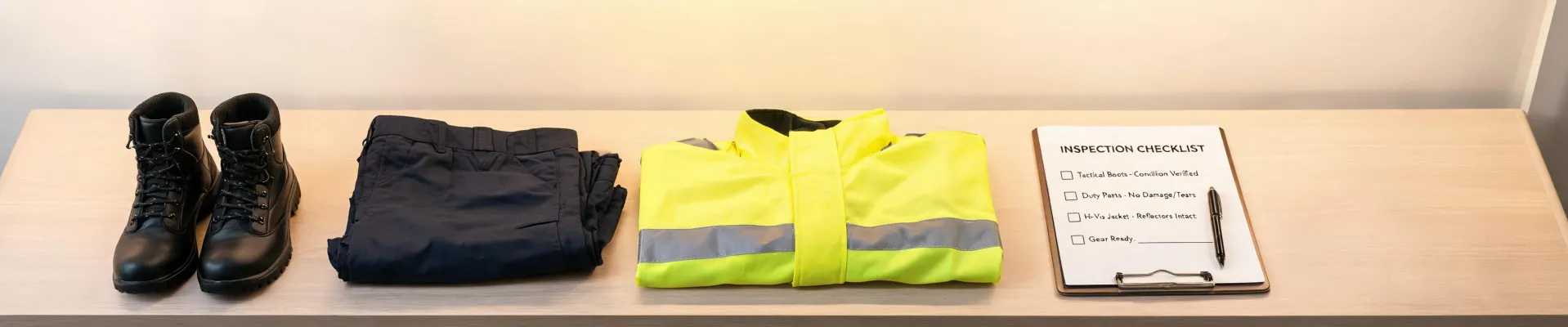
Men's Ariat steel toe boots, women's composite pairs, safety shoes from whatever brand clears your fit test — it doesn't matter nearly as much as the 90-day inspection cycle and the person who actually runs it. That's the part nobody puts on the quote sheet.